
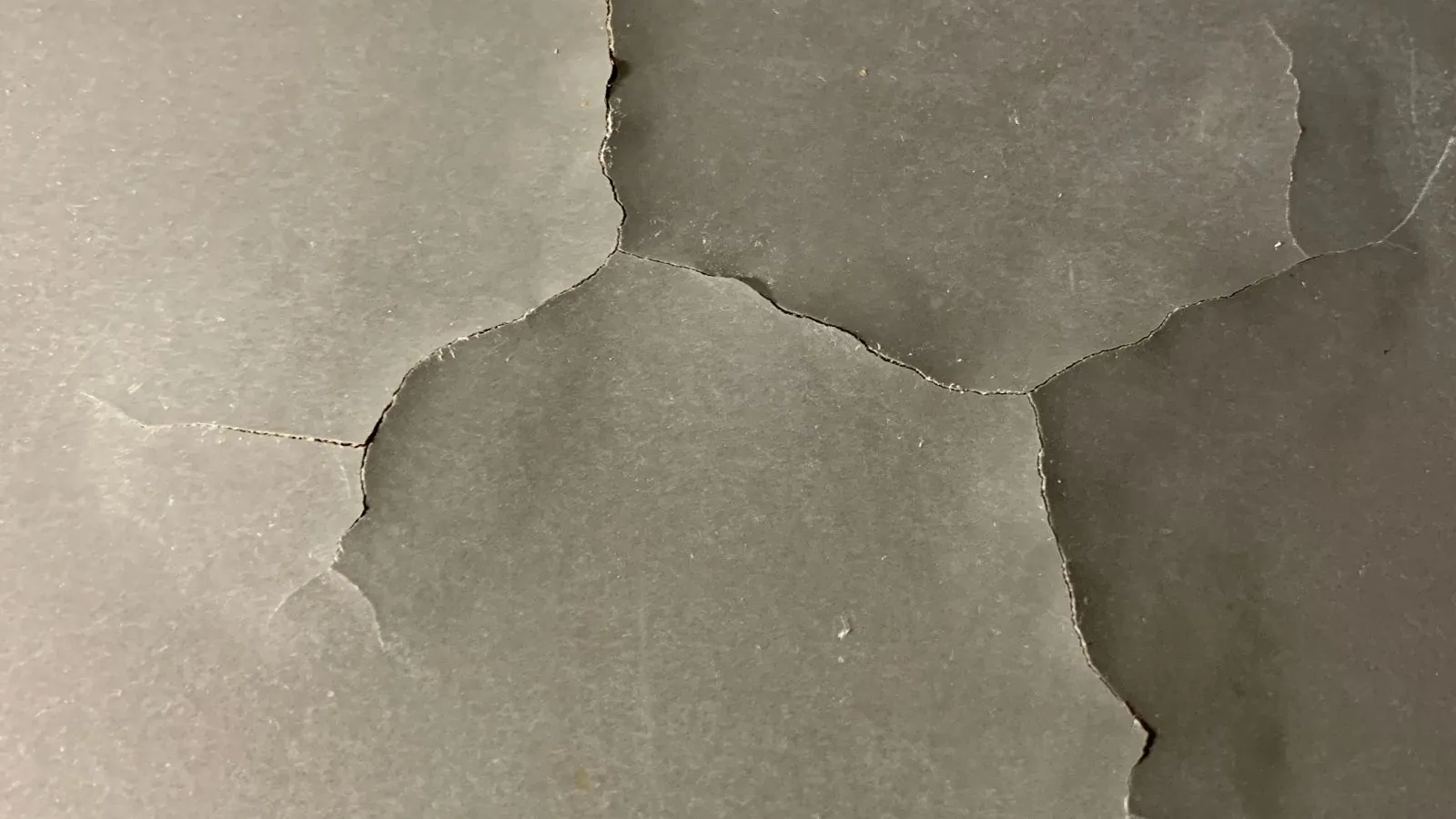
Paint is a film. It stays flat only while it is stuck to the surface behind it. When something breaks that bond, the film lifts into a bubble, and the most common something is water.
Not every blister means a leak, though. This guide helps you sort the harmless cases from the ones that need a moisture meter.
Why water makes paint bubble
Water reaches the back of the paint film in two ways. It can soak through the wall from behind, from a pipe, a roof leak or damp masonry. Or it can arrive as vapor, from a steamy bathroom or a humid lower level, and condense behind the film.
Either way the moisture pushes outward and the paint loses its grip. Latex paint stretches, so it tends to form soft, rounded bubbles that may hold water. Older oil paint is brittle and cracks or flakes instead.
Water, heat or poor preparation?
| Clue | Points to water | Points to heat | Points to prep |
|---|---|---|---|
| Location | Below a bathroom, near a window, at the base of a wall, on a ceiling | Near a radiator, stove or sunny window | Anywhere, often across a whole wall |
| Timing | Appears or grows after rain or after showers | Appears in hot weather or soon after painting in the sun | Appears within days or weeks of repainting |
| Feel | Soft, sometimes squishy, wall may feel cool | Dry and crisp | Dry, peels off in a clean sheet |
| Color | Yellow or brown staining nearby | No staining | No staining |
| Behind the bubble | Damp, crumbly or discolored | Dry, sound | Dusty, glossy or greasy |
If two or more clues sit in the water column, treat it as a moisture problem until a reading says otherwise.
Where the bubble is tells you where to look
A bubble on a ceiling under a bathroom points to the plumbing above. Our ceiling water damage repair page explains what happens next. A bubble beside or under a window points to rain getting in at the frame or the siding.
A line of blisters low on a wall suggests water wicking up from the floor or the base plate. On a lower-level wall it can mean moisture coming through the masonry. Bubbles on a bathroom wall with no plumbing behind it are usually condensation, and a better exhaust fan fixes them.
Bubbles keep coming back? Call for a moisture reading.
☎ Call (833) 521-1033What to do first: a safe way to check
Press gently near the edge of the bubble. A wall that gives under your finger is wet inside. Smell the area. Look at the other side of the wall and the room above.
Do not cut into a ceiling bubble that is large and heavy without a bucket and a clear floor. It may be holding water. And do not sand or scrape old paint until you have read the note about lead further down.
What a professional check adds
A pin moisture meter reads the wall itself, not just the surface. A thermal imaging camera shows the damp area's true outline, which is nearly always bigger than the blistered patch.
Under ANSI/IICRC S500, the published restoration standard, that reading is compared with a dry wall of the same type in the same house. If the wall is wet, the source is found and fixed first. Then the cavity is dried, as described on our structural drying page, and only then is the surface repaired. Painting over a damp wall with a stain-blocking primer hides the mark for a few months and nothing more.
Fixing it properly
Once readings are normal, loose paint is removed back to a firm edge. Damaged drywall paper is sealed or the section is replaced. Plaster that has gone soft or powdery is cut out and patched. The area is primed with a stain-blocking primer and repainted, usually across the whole wall so the sheen matches.
Where the board itself has softened, the repair becomes a wall and drywall water damage job.
Bubbled paint in Parkville's older houses
Two local facts change the advice here. First, Maryland Department of Planning tables, built on Census survey data, show about 90 percent of Parkville housing was built before 1980, and well over half before 1960. Many original rooms have plaster walls carrying several generations of paint. Plaster can stay damp far longer than drywall, so blisters may appear weeks after a leak that seemed minor.
Second, the federal ban on lead in house paint dates from 1978. In a home older than that, assume old layers may contain lead until tested, and do not dry-sand or scrape them. Ask any contractor about lead-safe work practices. In the townhomes of Ridgeleigh, blistering on a party wall can come from the neighboring house. In detached streets such as Harford Park, look first at windows, roof edges and bathrooms.
When it is worth a call
- The bubble is on a ceiling, or it is growing.
- There is staining, a smell or a soft spot.
- It came back after being repainted.
- More than one wall shows it.
A single small blister beside a radiator that has not changed in a year can wait.
Questions Parkville homeowners ask
Is bubbled paint always a sign of water damage?
No. Heat, painting over a dirty or glossy surface and painting in damp conditions can all cause it. Staining, softness and a link to rain or showers point to water.
My Parkville house has plaster walls. Does that change anything?
Yes. Plaster dries slowly and can blister long after a leak. It also may carry old lead-based paint, so avoid dry scraping and ask about lead-safe methods.
Can I pop the bubble and repaint?
You can, but if moisture caused it the bubble will return. Have the wall read with a meter first.
Does insurance cover paint damage from a leak?
If the leak itself is a covered sudden loss, repainting the damaged area is usually part of the repair. Ask your insurer.