
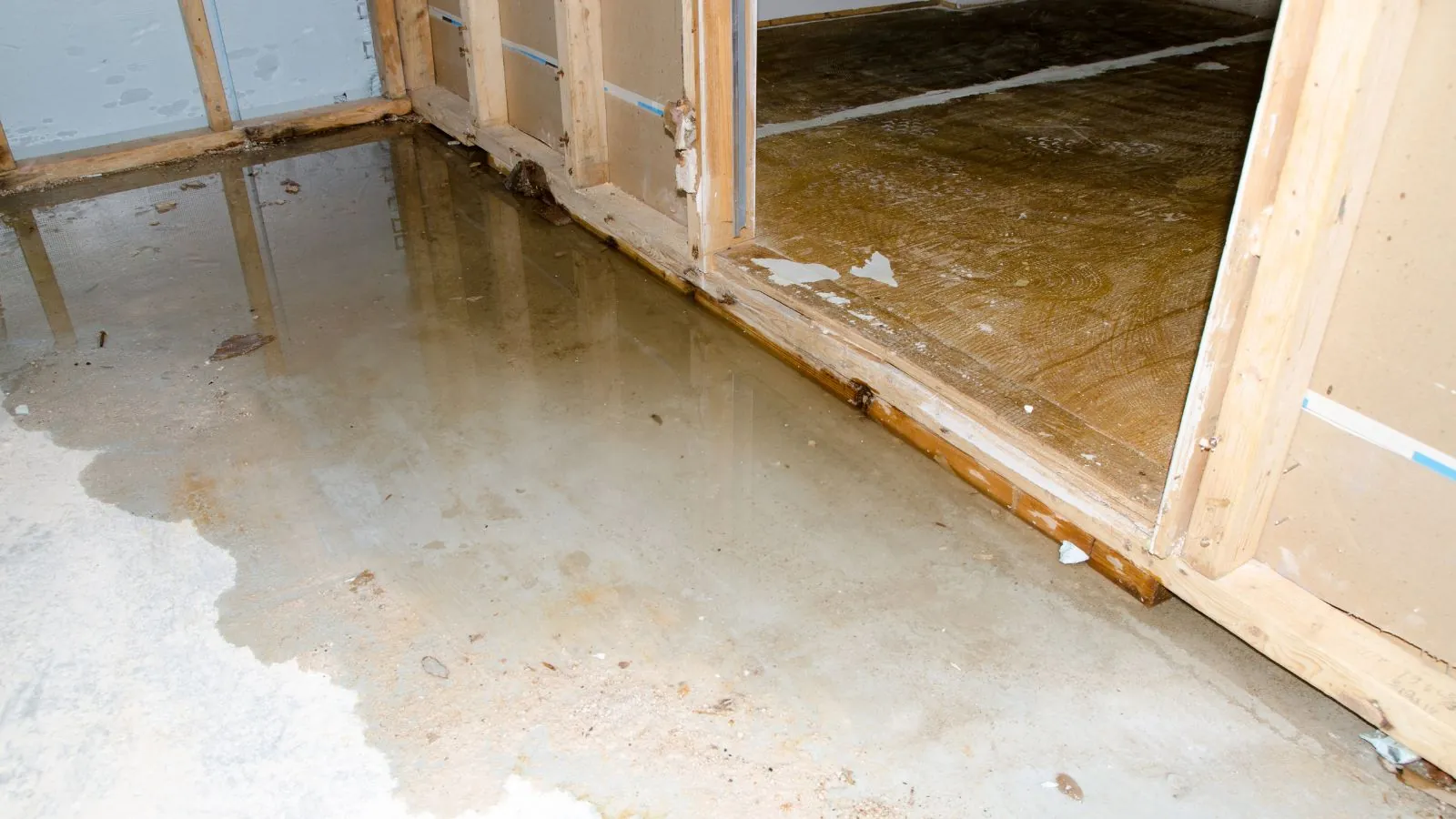
A sewage backup is wastewater coming back up through a floor drain, toilet, tub or sink, and sewage backup cleanup is the removal and disinfection that follows. In Parkville, MD, call (833) 521-1033. The line is open 24/7. Before you call, stop using water everywhere in the house. Every flush, shower and washer cycle adds to what is on the floor.
Keep children and pets out of the room and close the door. Do not walk through it in open shoes, and do not touch wet outlets or appliances.
Sewage backup: what to do first
Two calls matter. Baltimore County's Bureau of Utilities takes sewer backup reports and lists a daytime and an after-hours line on the County's Sewer FAQ page. The County checks whether the blockage is in the public main. The second call is to us, for the inside of your home.
Leave the cleanup to people with protective gear. Household bleach on top of raw sewage does not make a room safe, and a shop vacuum spreads contamination into the air.
Dirty water coming up from the basement drain
That phrase, or something close to it, is how most callers describe this. Black or gray water rising from the floor drain. A toilet that bubbles when the washer drains. A smell that arrives before the water does.
The restoration trade calls this Category 3 water, the most contaminated class in the ANSI/IICRC S500 standard. The name matters only because it sets the rules: porous materials that absorbed it are removed, not dried, and every surface is cleaned and disinfected before drying equipment runs.
Whose pipe is it? The Baltimore County rule
The County states that it cleans from the first accessible cleanout within 50 feet of the property line out to the main sewer. Repairs are made only to the part of the house connection in the public right-of-way. Anything inside the property boundary is the owner's responsibility.
The County also notes that an outside cleanout was not a building code requirement until the mid-1970s. Census estimates show about 90 percent of Parkville housing was built before 1980. Many older homes here will have no outside cleanout, which means the County cannot clear the line from the street side and a plumber has to work from inside.
Sewage on the floor? Keep everyone out and call the 24/7 line.
☎ Call (833) 521-1033How Category 3 cleanup is done
- Sewage and solids are extracted and removed.
- Carpet, pad, soaked drywall, insulation and other porous items are bagged and taken out.
- Hard surfaces are washed, then treated with a disinfectant rated for sewage.
- Framing and concrete are cleaned and treated.
- Only after cleaning do air movers and dehumidifiers go in.
| Item | After a sewage backup |
|---|---|
| Carpet and pad | Discarded |
| Drywall and insulation that got wet | Cut out and discarded |
| Solid wood furniture | Often cleaned and saved |
| Upholstered furniture and mattresses | Usually discarded |
| Concrete, tile, metal, glass | Cleaned and disinfected |
| Food, medicine, children's soft toys | Discarded |
Where the backup happened on the bottom level, the drying stage follows our basement water damage cleanup process. Deep water is first removed as described on the water extraction page. Wall sections that are cut out are rebuilt under wall and drywall water damage repair.
A backup caused by storm water overloading the system is treated the same way as flood damage cleanup, since both are Category 3.
Cost factors
- The area covered and the depth.
- How much finished material has to be removed.
- Volume of contents to sort, clean or discard.
- Cleaning and disinfection steps.
- Rebuild after drying.
Contaminated jobs are scoped and priced before removal begins. Call (833) 521-1033 for a figure on your backup.
Insurance: the backup endorsement
The Maryland Insurance Administration explains that a homeowners policy may cover this loss if you bought a water and sewer backup endorsement, and that Maryland law requires insurers to offer it. Without the endorsement, a backup is often not covered. Check your policy or ask your insurer.
Photograph the drain, the water line and damaged items before removal. Keep a list of what was discarded.
We take sewage calls from Parkville, Carney, Overlea, Rosedale and Nottingham.
Sewage Backup Cleanup questions from Parkville callers
Do you handle sewage backup emergencies at night or on weekends in Parkville?
Yes, 24/7. Stop using water, keep out of the area and call, whatever the hour.
Is it safe to stay in the house?
Usually, if the affected room can be closed off and you have a working bathroom elsewhere. If sewage reached living areas or the HVAC system, staying elsewhere during cleanup is wise. Health questions belong with your physician.
Do you clear the blockage?
No. A licensed plumber or the County clears the line. We clean, disinfect and dry the inside of the home.
Can the carpet be cleaned and kept?
No. Carpet and pad that absorbed sewage are discarded. That is standard practice under S500.