
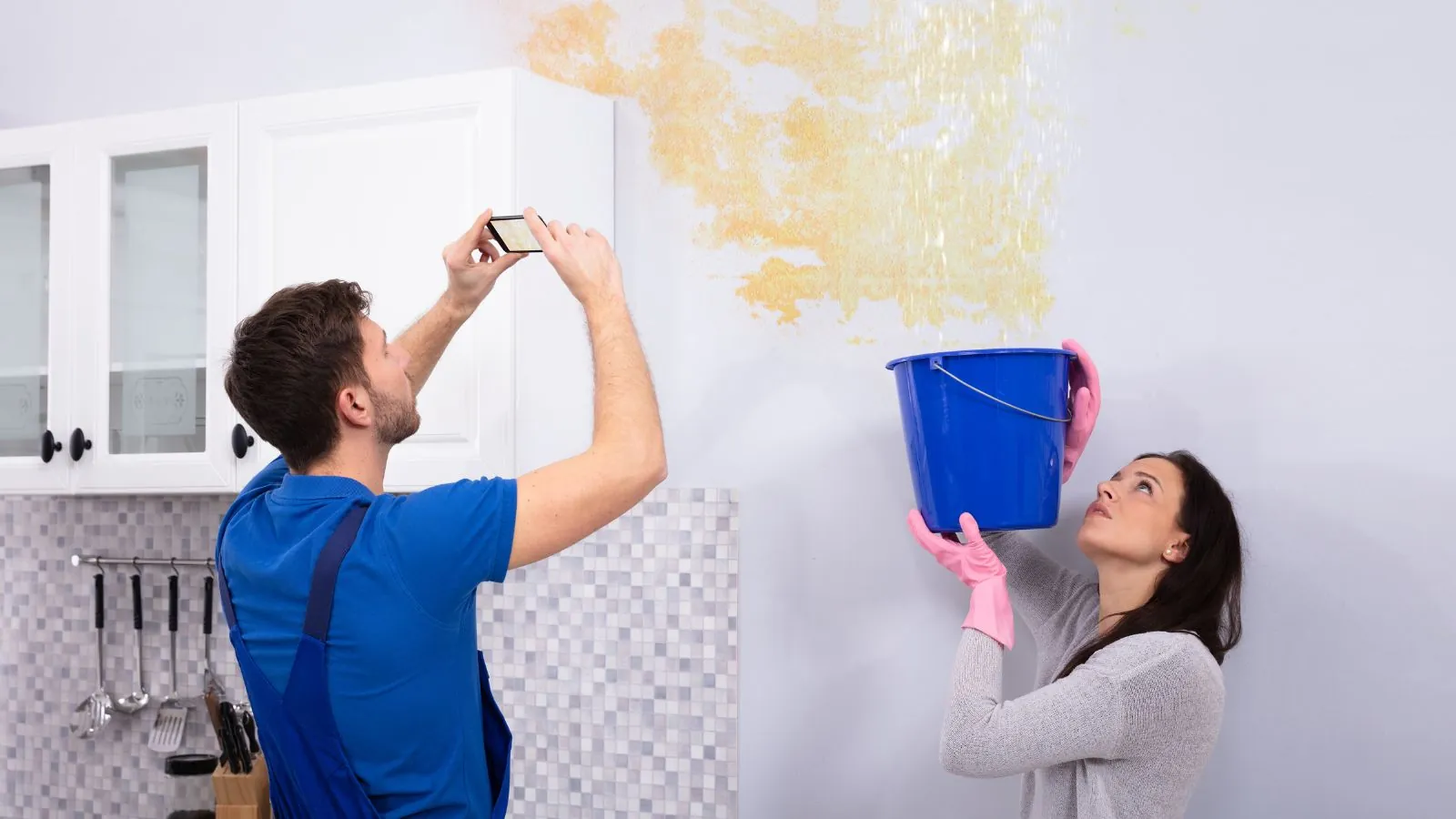
Wall water damage is moisture in drywall, plaster, baseboards and the framing and insulation behind them. For wall and drywall water damage repair in Parkville, MD, call (833) 521-1033. If the wall is wet now, find and stop the source if you can, pull furniture away and leave the baseboard alone until someone has checked it.
Most wall damage is found, not witnessed. A stain appears, paint bubbles or a spot gives when pressed. The line is open 24/7, though these jobs usually begin with a scheduled assessment.
How water moves in a wall
Drywall is gypsum between two sheets of paper, and it wicks water upward. A puddle against a wall can raise a damp line a foot or more above the floor in a day. Insulation in an exterior wall soaks it up and holds it.
Water also runs down. A leak upstairs, a roof problem or a window that lets rain in sends water down inside the cavity, where it collects on the bottom plate. The baseboard hides that until it swells.
Plaster, drywall and party walls in Parkville
More than 60 percent of Parkville homes were built before 1960, by Census estimates, and houses of that age often have plaster on wood or metal lath in original rooms and drywall wherever someone has renovated. The two need different handling.
Close to 30 percent of units are attached homes. In a townhome or rowhome, one wall is shared with the neighbor, and that wall is often masonry with plaster or furred drywall over it. A stain on a party wall may have its source next door, and both sides should be read with a meter.
| Wall type | How it reacts to water | Usual repair |
|---|---|---|
| Drywall | Softens, sags and loses strength quickly | Dried if caught early, otherwise the wet section is cut out |
| Plaster on lath | Holds up to one wetting, then cracks or lets go from the lath | Dried slowly, loose areas removed and patched |
| Plaster or drywall over masonry | Masonry stores moisture and releases it for weeks | Extended drying before any refinishing |
| Paneling over studs | Hides wet framing behind it | Removed to check and dry the cavity |
Signs of a wet wall
- Paint that bubbles, peels or stains yellow or brown.
- A soft spot, or a place where a hole seems to be forming.
- Baseboard pulling away or swelling.
- A musty smell near one section.
- A wall that feels cooler than the walls around it.
Callers describe a kitchen wall damaged by a siding leak, a wall in the main bathroom that has gone soft and saturated drywall in a garage. Different sources, same first step.
Wall soft or stained? Call for a moisture reading before it is cut open.
☎ Call (833) 521-1033Mapping before cutting
A moisture meter and a thermal imaging camera outline the wet area on the surface. Only then is a decision made about opening it. Cutting first and measuring later nearly always removes more wall than necessary.
When drywall is opened, the standard method is a flood cut: a straight horizontal cut a set height above the wet line, so new board can be fitted cleanly. Wet insulation is pulled out. The studs and plate are dried with air movers and a dehumidifier, as described under structural drying and dehumidification.
Clean water caught early can sometimes be dried without cutting, by removing the baseboard and drilling small holes behind it to push air into the cavity.
The repair
New drywall is hung, taped, finished and primed. Plaster patches are built up in coats. Baseboard is replaced or reinstalled, then the wall is painted, usually corner to corner so the patch does not show.
If the same leak marked the ceiling, see ceiling water damage repair. A wall behind kitchen cabinets is part of kitchen water damage restoration. Where rain entered through siding or a window, the outside repair comes first, covered on the storm water damage cleanup page.
What not to do with a wet wall
- Do not use outlets or switches on a wall that is wet.
- Do not cut into a wall without knowing where the wiring and pipes run.
- Do not sand or scrape old paint in a pre-1978 house, which may contain lead.
- Do not seal the wall with primer while it is still damp.
Cost factors
- Area of wall affected and its height.
- Plaster or drywall, and any texture to match.
- Insulation to replace.
- Drying time, longer for masonry-backed walls.
- Painting, and how far it has to extend to blend.
The wall is mapped, then you are given the scope and the price. Call (833) 521-1033 to book that reading.
Insurance and permits
Sudden leaks are often covered. Long-term seepage, such as a slow siding leak, often is not. Photograph the wall before and after it is opened, and check your policy or ask your insurer.
Baltimore County requires permits for structural changes and for all electrical or plumbing work. Like-for-like wall repair is not listed among them on the County's permit page, so ask the Department of Permits, Approvals and Inspections if you are unsure.
Wall repair calls come from Parkville, Towson, Perry Hall, Rosedale and Fork.
Wall and Drywall Water Damage questions from Parkville callers
Does wet drywall always have to be replaced?
No. Drywall wet with clean water for a short time, and still firm, can often be dried. Soft, sagging or contaminated board is replaced.
Can I just patch the hole and paint?
Only after the cavity reads dry and the source is fixed. Sealing damp framing inside a wall leads to odor and repeat damage.
My contractor wants the damage assessed before new materials go in. Do you do that?
Yes. A moisture assessment with documented readings shows whether framing is ready to be closed up.
Is a wet wall an emergency?
If water is running, yes. A stain or soft spot is not an emergency, but it should be assessed soon.