
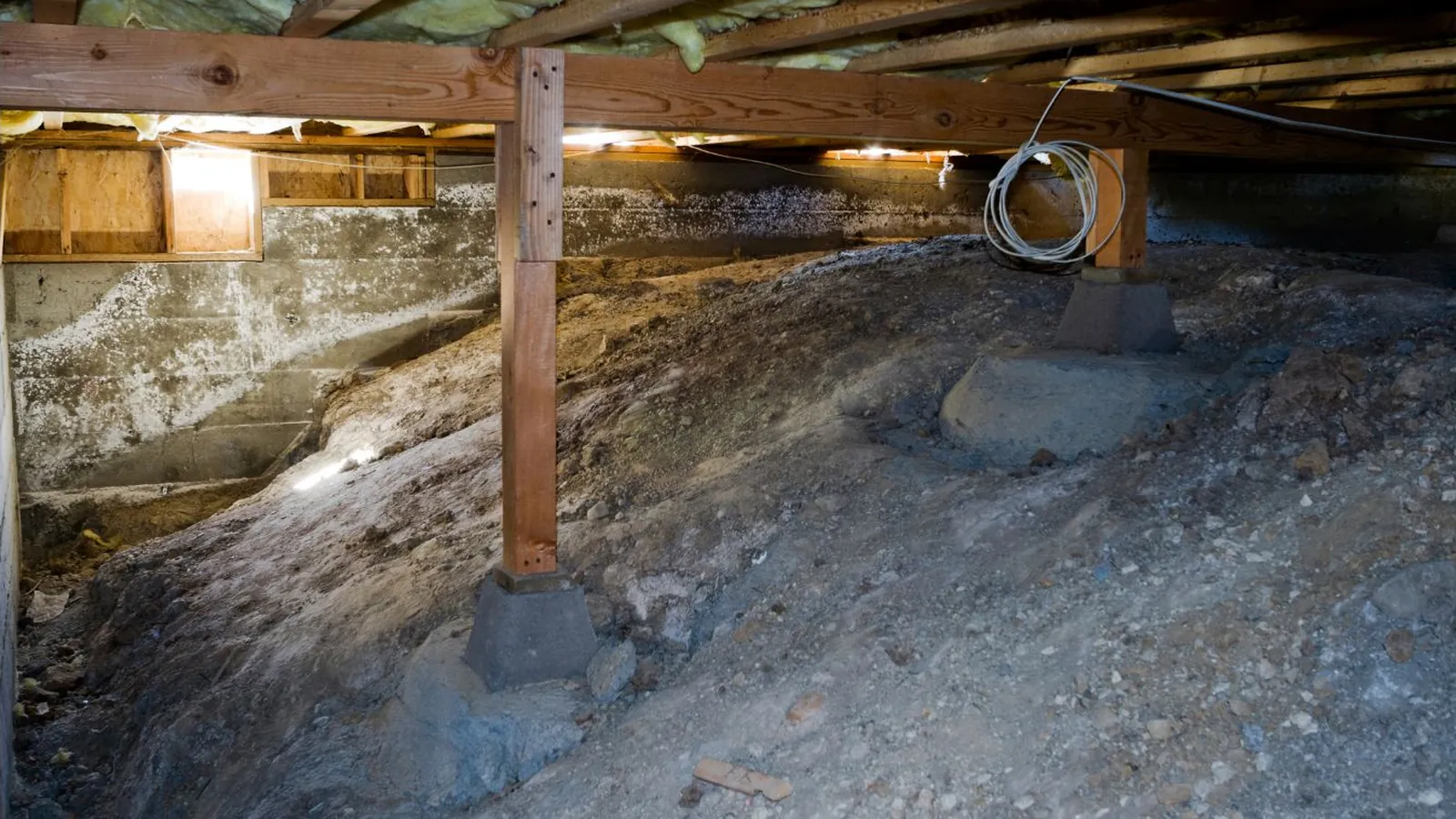
Crawl space water damage is water or long-term dampness in the shallow void between the ground and the floor framing. For crawl space water damage cleanup in Parkville, MD, call (833) 521-1033. Do not crawl in to look. A flooded crawl space can hold live wiring, and the air may be poor. Look from the hatch with a flashlight and describe what you see.
Most crawl space problems build slowly, which is why this page is not framed as an emergency. The exception is a broken supply line under the house. If you can hear spraying, close the main valve at once.
Do Parkville homes have crawl spaces?
Some do. No public dataset counts foundation types here, so we will not put a number on it. Crawl spaces turn up under additions, enclosed porches and sunrooms built onto mid-century houses, and under some homes that have only a partial lower level.
Those small, often forgotten voids are exactly where a problem goes unnoticed. Nobody looks under a 1960s rear addition until the floor above feels soft or a room smells damp.
How water gets in
- A supply or drain line under the floor leaks or freezes and splits.
- Rain runs toward the foundation and enters through vents or the access door.
- A downspout empties beside the wall.
- An irrigation or hose line fails outside and floods the void.
- Ground moisture rises with no vapor barrier to stop it.
Callers tend to report the result, not the cause: water standing under the house after rain, or a musty smell that will not go away.
Signs upstairs that point to the crawl space
Wood floors above a wet crawl space cup, with board edges higher than their centers. Doors stick. Baseboards show gaps. The room feels humid, and the smell is strongest near floor registers. If you see cupping, our hardwood floor water damage repair page explains why the fix starts below the floor and not on top of it.
Water under the house? Call for an assessment before the floor above is affected.
☎ Call (833) 521-1033What the cleanup involves
Standing water is pumped out. Fallen or saturated insulation is bagged and removed, because fiberglass that has soaked up water will not dry in place. Any torn or missing ground cover is noted.
Then the framing is measured. A moisture meter reads the joists, the sill plate and the subfloor from below. Air movers and a dehumidifier are set in the void, which often means sealing vents for the drying period so outside air does not undo the work.
| Finding | What is done | What it means for you |
|---|---|---|
| Standing water | Pumped out, source identified | The source needs its own repair |
| Wet insulation | Removed and bagged | Replace after joists read dry |
| Damp joists, firm wood | Dried in place with monitoring | No structural repair expected |
| Soft or decayed wood | Flagged for a carpenter or engineer | A separate repair before the area is closed |
| Wet ductwork or wiring | Flagged for HVAC or an electrician | Have it checked before use |
The equipment and the readings are explained on our structural drying page.
What cleanup does not include
We remove water and dry the structure. We do not regrade yards, install drains or sump pumps, or encapsulate crawl spaces. If water returns with every rain, the drying will not last until the outside cause is fixed, and you will be told that plainly. Rain-driven water has more detail on our storm water damage cleanup page. A pipe that split in cold weather is covered under frozen pipe water damage.
What not to do with a wet crawl space
- Do not enter while water is standing or if you can see wiring or a junction box near it.
- Do not run a pump or fan from an extension lead lying in water.
- Do not seal the vents and walk away. Trapped damp air does more harm than moving air.
- Do not ignore a sewage smell. Close the hatch and say so when you call.
Wood moisture targets follow the approach in the ANSI/IICRC S500 standard: joists are compared with dry framing elsewhere in the same house.
Cost factors
- Depth of standing water and how it has to be pumped.
- Height and access: a 16 inch void takes far longer than a 36 inch one.
- Square footage of insulation to remove.
- Days of drying equipment.
- Whether contaminated water, such as a drain leak, was involved.
A crawl space is priced after it is seen from the hatch, and you hear that price first. Call (833) 521-1033.
Insurance
A sudden pipe break under the floor is often covered. Groundwater and surface water entering a crawl space are usually treated as flood or seepage and often are not. Check your policy or ask your insurer. Photos from the hatch before pumping are useful.
Crawl space calls come from Parkville and from Long Green, Hydes, Fork, Upper Falls and Perry Hall. The line is open 24/7.
Crawl Space Water Damage questions from Parkville callers
Is water in a crawl space an emergency?
A broken pipe is. Seepage after rain usually is not, but it should be assessed in days and not months, because the floor framing absorbs that moisture.
Can I dry it with a box fan in the hatch?
A fan moves damp air around. It does not remove moisture from joists. Drying needs dehumidification and readings to confirm it worked.
Does wet insulation have to come out?
Yes, in nearly every case. It holds water against the wood and sags away from the floor, so it no longer insulates.
Will you install a vapor barrier?
No. Encapsulation and drainage are separate services. We can tell you what we saw so you can get quotes from that trade.