
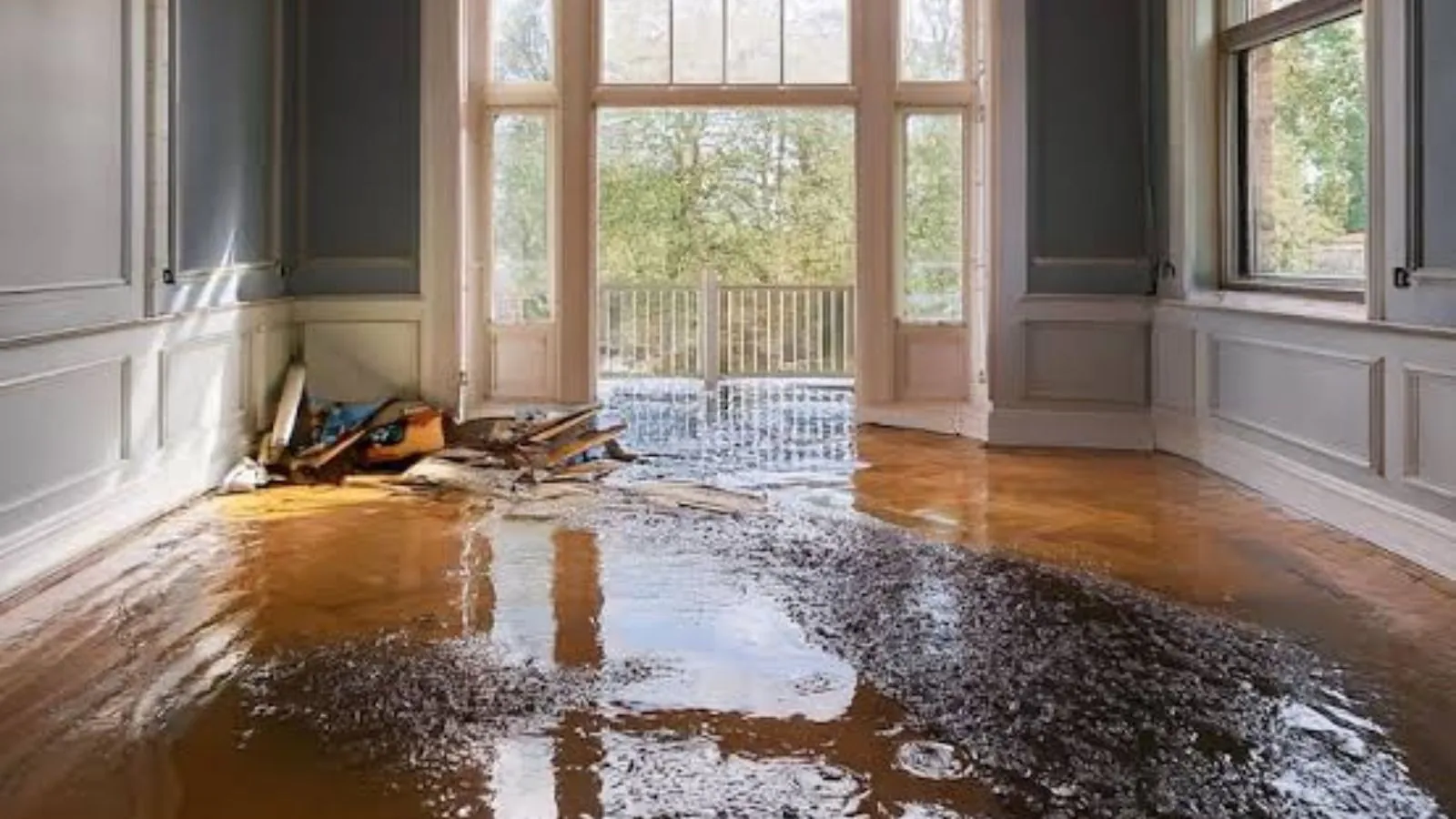
Flood damage is damage from water that rose from outside the building: street runoff, groundwater or an overflowing stream. Flood damage restoration in Parkville, MD begins with a call to (833) 521-1033, and the line is open 24/7. Until help arrives, stay out of the water. Floodwater carries soil, fuel residue and sewage, and it can hide live electricity.
Move to an upper floor, take pets with you and bring medication and documents if they are within reach. Do not start a car or a generator in an attached garage.
Flooded home: what to do first
Call 911 if anyone is trapped or the water is still rising fast. Report flooded streets and blocked drains to Baltimore County through 311 or the BaltCoGo app. Then call us about the inside of the house.
Do not pump a flooded lower level empty all at once while the ground outside is still saturated. Pressure from wet soil can damage foundation walls. Crews lower the water in stages for that reason.
Does Parkville flood?
Parkville has no river, and its census boundary contains no open water. Flooding here comes from intense rain that outruns storm drains and from the small streams and drainage channels that carry that runoff away. Baltimore County's Department of Public Works and Transportation opened a Parkville drainage study in 2025 to gather residents' reports of drainage and flooding in Parkville-area watersheds.
That study is the County acknowledging the problem is local and uneven. One block can stay dry while the next takes water. We will not label any street as flood-prone. For your own property, check the FEMA Flood Map Service Center for your address, and remember that a low-risk zone does not mean no risk.
Why floodwater is handled differently
The S500 standard classes water from rivers, streams and ground surface flooding as Category 3, the most contaminated class. That sets the rules for everything it touched.
| Material | After clean water | After floodwater |
|---|---|---|
| Carpet and pad | Often dried and kept | Removed and discarded |
| Drywall | Dried if caught early | Cut out above the water line |
| Solid wood framing | Dried | Cleaned, treated, then dried |
| Upholstered furniture | Often saved | Usually discarded |
| Hard, non-porous items | Wiped down | Cleaned and disinfected |
Rising water is separate from wind and rain coming through the roof or siding, which we cover under storm water damage cleanup. When the flooding is limited to the lower level, the basement water damage cleanup page has the detail.
Floodwater inside? Stay out of it and call the 24/7 line.
☎ Call (833) 521-1033The cleanup sequence
Standing water comes out by pump and water extraction. Mud and silt are shovelled and washed out. Wet drywall and insulation are cut away above the high-water mark. Remaining surfaces are cleaned and treated with an antimicrobial before any drying equipment is switched on.
Only then does drying start, because blowing air across contaminated surfaces spreads what is on them. If a floor drain also backed up, the same rules apply as on our sewage backup cleanup page.
Cost factors after a flood
- Depth of the water and how long it stayed.
- Square footage and whether finished rooms were involved.
- Volume of contents and debris to remove.
- Amount of wall and floor material cut out.
- Cleaning and treatment before drying.
The plan and its price are set out for you first. Call (833) 521-1033 to have your flood loss measured.
Flood insurance is a separate policy
The Maryland Insurance Administration states that homeowners policies generally do not cover flooding. Flood damage needs a separate flood policy, such as one through the National Flood Insurance Program. Seepage through a foundation wall is generally treated as maintenance and not covered by either. Ask your insurer and your flood carrier which applies.
Photograph the water line on every wall before cleanup begins. Baltimore County also asks residents to submit flood photos through MyCoast Maryland.
Flood cleanup calls come from Parkville and from Rosedale, Nottingham, Perry Hall and Upper Falls.
Flood Damage Cleanup questions from Parkville callers
Do you handle flood damage emergencies at night or on weekends in Parkville?
Yes. Storms rarely keep office hours, and neither does this phone line, which is open 24/7.
Can anything be saved after a flood?
Yes. Solid wood, metal, glass, hard plastics and many structural materials can be cleaned and dried. Porous items that absorbed floodwater usually cannot.
Is it safe to turn the power back on?
Not until an electrician has checked any wiring, outlets or equipment that was under water. Do not reset breakers yourself in a flooded house.
Does Baltimore County buy out flooded homes?
The County describes a buyout program for primary residences in a 100-year floodplain that flood repeatedly. Details and eligibility are on its Flooding Resources page.