
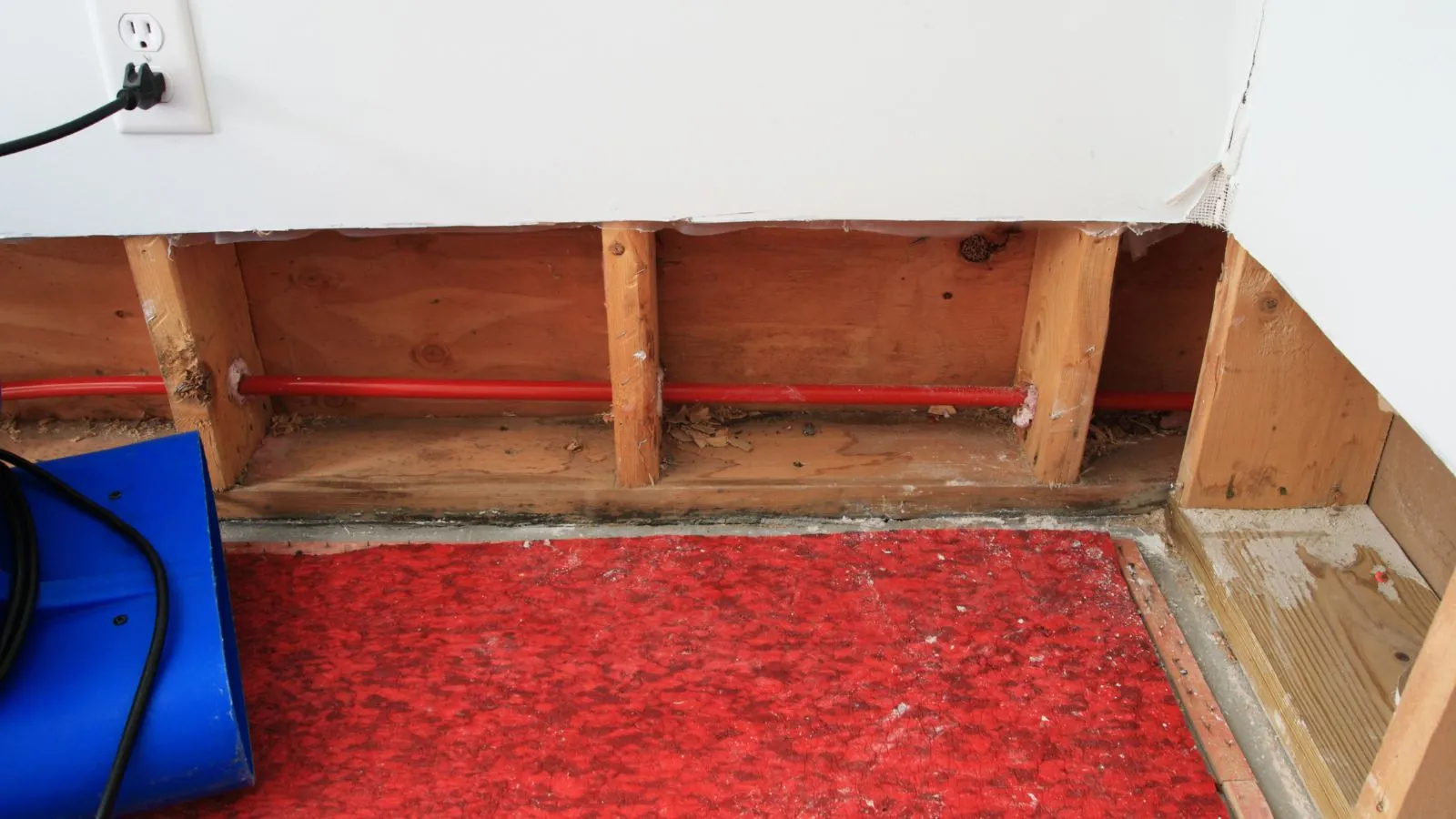
Structural drying is the controlled removal of moisture from a building's framing, subfloor, walls and concrete after the liquid water is gone. For structural drying and dehumidification in Parkville, MD, call (833) 521-1033. This is the stage that decides whether a leak ends as a repair or returns months later as odor, staining and warped floors.
It is rarely an emergency in itself, since it follows extraction. The phone line is still open 24/7, because the sooner drying equipment is running, the more of the house can be saved.
The floor looks dry but the room still smells damp
People do not search for dehumidification by name. They say the carpet was mopped up but the smell stayed. The wall feels cool. The paint has started to bubble a week after the leak. A window fogs in a room that never fogged before.
Those are signs of bound moisture, water held inside materials where a towel cannot reach. Structural drying is the trade name for getting it out. Air movers lift moisture off surfaces, dehumidifiers pull it from the air, and meters prove when it has gone.
Water mitigation: where drying fits
Water mitigation is the industry word for everything done to stop a water loss from getting worse. It covers extraction, removal of unsalvageable material and drying. Insurers often list mitigation separately from the rebuild.
So when an estimate says mitigation, drying is the largest part of it. On this site the bare term belongs to the homepage, and this page explains the drying portion in detail.
Moisture mapping
Before equipment is set, the wet area is mapped. A pin or pinless moisture meter gives readings in wood and drywall. A thermal imaging camera shows cooler, damp areas behind finished surfaces. A hygrometer measures the air.
The map does two jobs. It shows where equipment has to go, and it sets the target. Under the S500 standard, the drying goal comes from readings in unaffected parts of the same building, not from a generic number.
Still damp days after a leak? Call to have it measured.
☎ Call (833) 521-1033The equipment in plain words
| Equipment | What it does | Typical run time |
|---|---|---|
| Air mover | Pushes fast air across wet surfaces to speed evaporation | Throughout the job |
| LGR dehumidifier | Removes water vapor from the air and drains it away | Throughout the job |
| Desiccant dehumidifier | Dries very wet or cold spaces, hardwood and plaster | Harder jobs |
| Air filtration unit | Captures dust while materials are disturbed | During removal work |
| Injection or mat system | Directs dry air into wall cavities or under hardwood | When finishes are being saved |
Air movers without a dehumidifier just raise the humidity in the room. That is the usual reason do-it-yourself drying stalls.
How long drying takes in Parkville houses
Three to five days of continuous running suits most clean-water losses in drywall and carpet. Building materials change that. Census estimates show more than 60 percent of Parkville homes were built before 1960, and houses of that age often have plaster walls, solid wood subfloors and masonry party walls.
Plaster and brick release moisture slowly. A wall that would dry in three days as drywall can need a week or more as plaster on masonry. Summer humidity in Maryland also means more dehumidifier capacity is needed from June through September than in winter.
Daily readings decide when equipment comes out. Each visit is logged, and that drying log goes into your records.
Dry in place or remove
Drying in place keeps finishes and avoids a rebuild, but it takes longer and needs monitoring. Removal is faster and certain, at the price of repair work. The choice depends on the water category, how long it sat and what the material is. Contaminated water removes the choice, as explained on the sewage backup cleanup page.
For how individual materials respond, see hardwood floor water damage repair and wall and drywall water damage repair. The first step before any of this is water extraction.
What to do while the equipment runs
- Keep doors and windows in the drying area closed unless told otherwise.
- Leave units where they were placed and do not unplug them.
- Keep children and pets away from air movers and trailing cords.
- Empty nothing by hand. Dehumidifiers drain through a hose.
- Report a tripped breaker, a new smell or a new wet spot straight away.
Cost factors
- Number of air movers and dehumidifiers the wet area needs.
- Days of running time.
- Materials: plaster, hardwood and concrete take longer.
- Monitoring visits.
- Any removal needed to let cavities dry.
The equipment count, the expected days and the price are explained before the first unit is switched on. Call (833) 521-1033.
Insurance
Drying logs, moisture maps and equipment records are the documents adjusters ask for on a water claim. Sudden losses are often covered and gradual ones often are not. Check your policy or ask your insurer.
We run drying jobs across Parkville and for callers in Towson, Lutherville Timonium, Perry Hall and Nottingham.
Structural Drying questions from Parkville callers
The carpet feels dry. How do I know if the floor underneath is?
You cannot tell by touch. A moisture meter reads the pad, subfloor and wall bases. Surfaces dry first and hide what is below.
Can I rent the air movers and dehumidifiers and run them myself?
We do not rent equipment. It is used on jobs, placed according to the moisture map and adjusted from daily readings.
Will the equipment run up my electric bill?
It uses power for several days, and the amount depends on the number of units. Some insurers reimburse it as part of a covered claim, so ask yours.
Can I turn the machines off at night?
Please do not. Drying depends on continuous running. Stopping overnight lets moisture settle back into materials and adds days.