
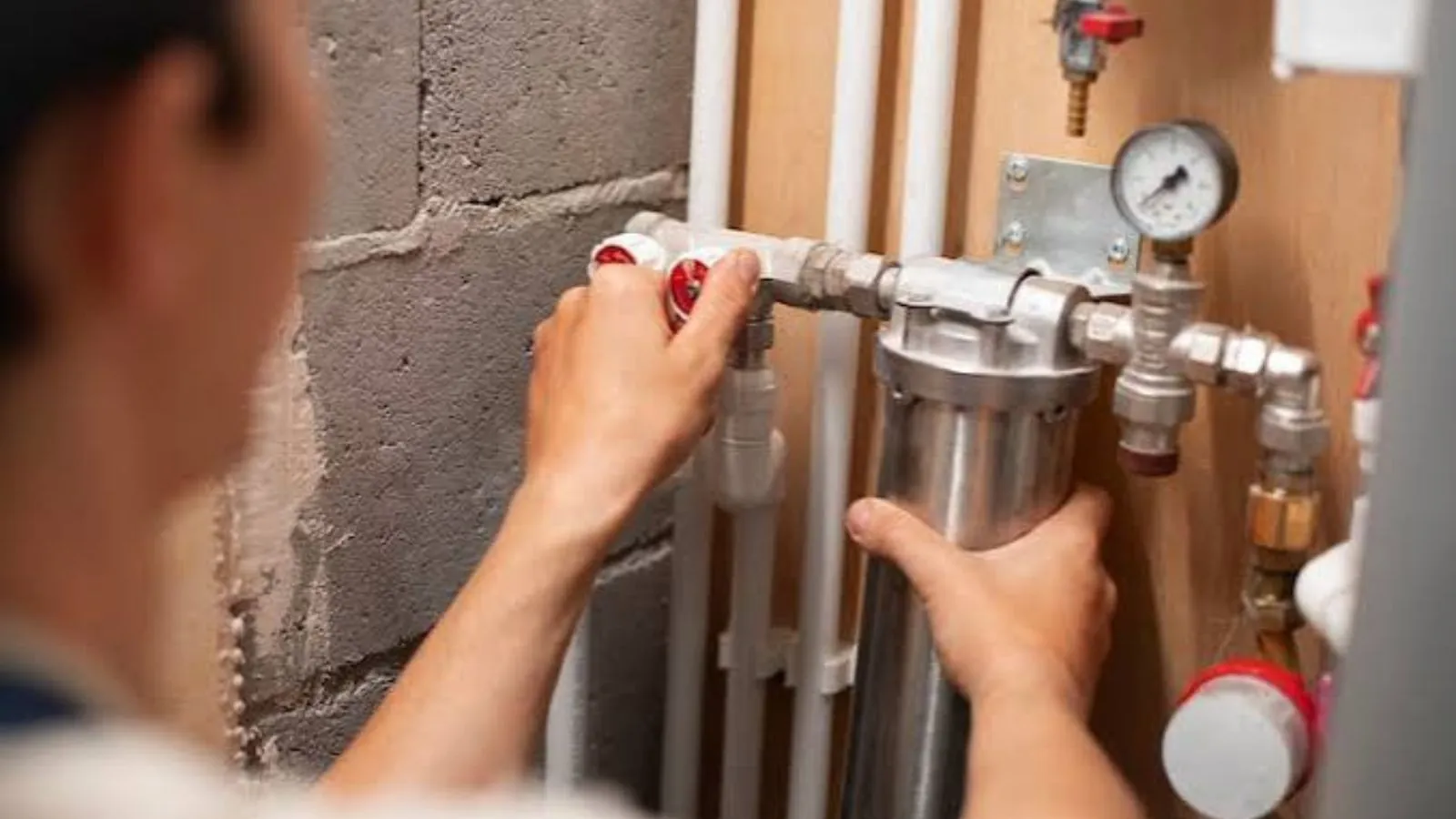
A water heater leak is a tank failure, and the damage is larger than the tank's 40 or 50 gallons because the cold supply keeps refilling it. For water heater leak cleanup in Parkville, MD, call (833) 521-1033, open 24/7. First close the valve on the cold pipe entering the top of the heater. Then switch a gas unit to off or pilot, or turn off the breaker for an electric one.
The water may be scalding. Keep children away, wear shoes and do not kneel in it.
Water heater burst: why it cannot wait until morning
A tank that has rusted through does not seal itself. Until the inlet is closed, it delivers a steady flow at full house pressure, hour after hour. Homeowners often find it only when hot water runs out or a lower level carpet squelches underfoot.
The heater usually sits beside the furnace, the electrical panel or stored belongings. Water on the floor near a gas appliance or panel is a reason to act now. If you smell gas, leave the house and call the gas utility or 911 before anything else.
Where heaters sit in Parkville homes
About 70 percent of Parkville households heat with utility gas, per Census estimates, and gas water heaters are common alongside those furnaces. In townhomes and older detached houses the unit is typically on the bottom level. In apartments and condos it may be in a hall closet above another unit.
Location decides the damage. A heater on a concrete floor wets stored boxes, wall plates and any finished flooring nearby. A heater in an upstairs closet sends water through the ceiling below, which then becomes ceiling water damage repair.
Signs a tank is about to fail
- Rust-colored water at the hot taps.
- A damp ring or mineral crust on the floor around the base.
- Popping or rumbling from sediment as it heats.
- Moisture at the fittings on top or at the relief valve pipe.
Any of these is a reason to call a plumber before the cleanup call becomes necessary.
Tank leaking? Close the cold inlet valve and call the 24/7 line.
☎ Call (833) 521-1033How the cleanup works
Hot water spreads fast and soaks deeper than cold, so the wet area is usually wider than it looks. After water extraction, a moisture meter checks the bottom plates of nearby walls, the stair stringers and anything stored on the floor. Heater water often carries rust and sediment that stain concrete and carpet.
| What got wet | Usual approach |
|---|---|
| Bare concrete floor | Extract, clean the sediment, dry with air movers |
| Carpet over concrete | Lift carpet, discard the pad, dry and reinstall if clean |
| Finished wall bases | Remove baseboard, dry the cavity, replace swollen sections |
| Stored cardboard and paper | Discard or sort for salvage on day one |
| Furnace or panel nearby | Have the technician or electrician check it before use |
Drying a closed utility room takes dehumidifiers as much as fans, as explained on the structural drying page. If carpet was involved, see carpet water damage restoration.
What to do before the crew arrives
- Close the cold inlet valve on top of the heater.
- Turn a gas unit to off or pilot, or switch off the breaker for an electric one.
- Keep away from the water until it cools.
- Do not relight a pilot or restart the heater.
- Do not drain the tank through the house unless a plumber tells you to.
Cleanup and drying targets follow ANSI/IICRC S500, which also explains why heater water that mixed with a floor drain backup is handled as contaminated.
What sets the cost
- How long the tank fed water before the inlet was shut.
- Finished or unfinished space around the heater.
- Whether a ceiling below was involved.
- The amount of stored contents to move or discard.
- Drywall and flooring to replace afterward.
Scope first, price second, work third. Call (833) 521-1033 and describe the tank and the room it is in.
Insurance and a failed water heater
A sudden tank rupture is often a covered water loss, while the replacement heater usually is not. A tank that seeped for months may be treated as a maintenance problem. Take photos of the tank base and its data plate, and ask your insurer.
Replacing the heater is plumbing work. Baltimore County requires a licensed plumber and a permit for it. We do the cleanup and the repair of what got wet.
Calls about failed water heaters come from Parkville, Carney, Overlea, Rosedale and Nottingham.
Water Heater Leak Cleanup questions from Parkville callers
Do you handle water heater leak emergencies at night or on weekends in Parkville?
Yes, day or night, 24/7. Close the cold inlet valve and call with your address.
Do you replace the water heater?
No. A licensed plumber replaces the unit. We extract the water, dry the area and repair damaged walls and floors.
The floor is concrete. Does it need drying?
Yes. Concrete absorbs water and releases it slowly, and wall plates sitting on it stay damp. Drying matters most where flooring or walls will cover it.
Is water from a heater clean?
It starts as clean supply water but picks up rust and sediment. If it sat for days or mixed with a floor drain backup, it is treated as contaminated.