
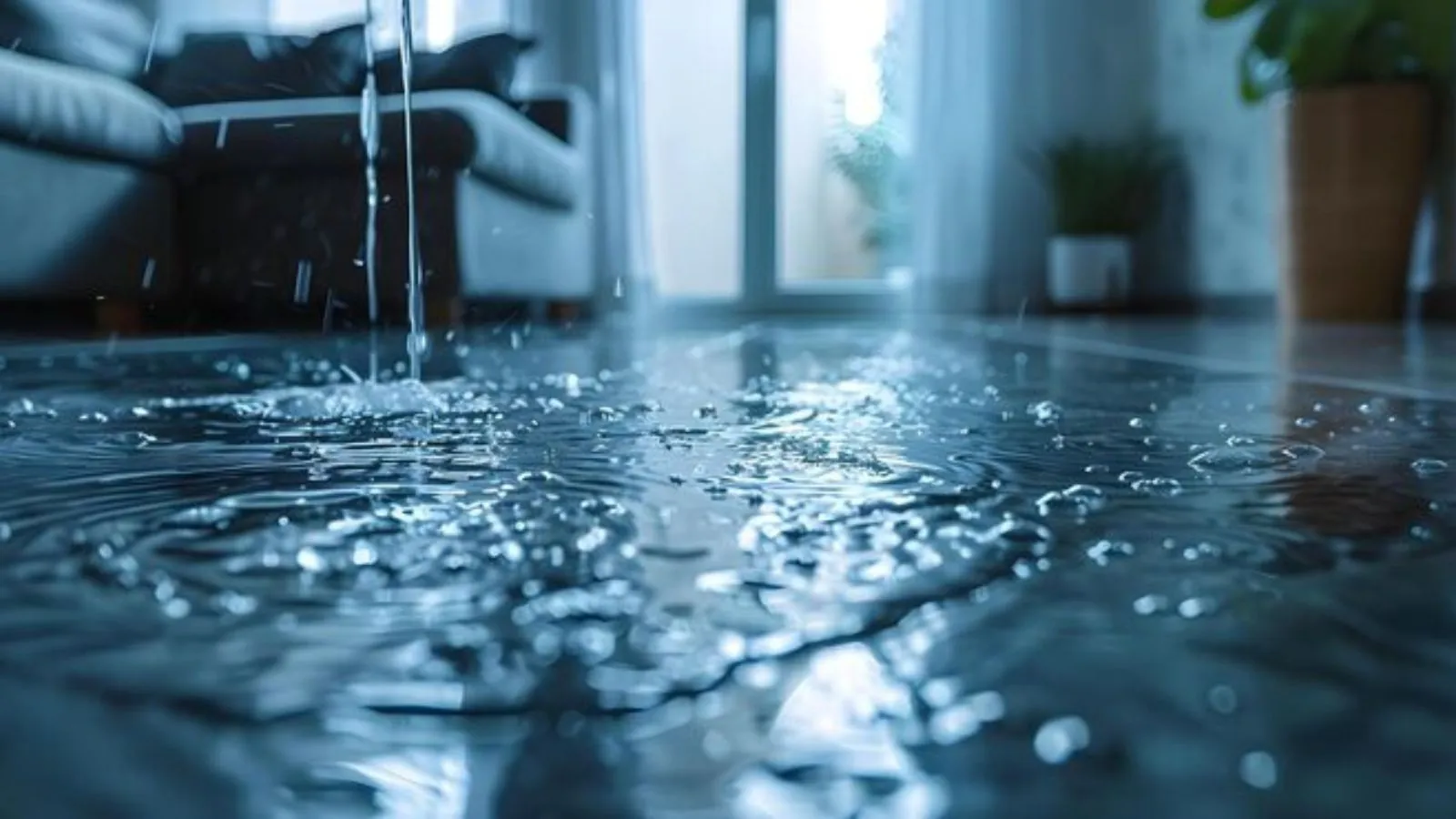
Plenty of water damage does not need a professional. A glass knocked over, a sink that overflowed for a minute, a small drip caught in a bucket. Calling a crew for those would be a waste of your money.
Other losses look just as manageable and are not. The difference is rarely the amount of water you can see. It is where the water went and what kind it was.
The four tests
1. Was the water clean?
Supply water from a pipe, tap or tank is clean. Water from a washer or dishwasher drain is gray. Anything from a floor drain, toilet backup or outside flooding is contaminated. Only clean water is a do-it-yourself job beyond a wipe-down of a hard floor.
These three groups are the Category 1, 2 and 3 definitions in ANSI/IICRC S500, the published standard for water damage restoration.
2. Has it been less than a day or two?
Fresh clean water can be dried. Water that has sat for days has picked up contamination and soaked deep. If you do not know how long it has been there, assume it is too long.
3. Is it only on surfaces?
Water on tile, sealed concrete or vinyl sheet that never reached a wall or went under anything is a surface spill. Water that ran under baseboards, cabinets or floating floors, or came through a ceiling, has entered the structure.
4. Is the area small?
A workable rule of thumb is roughly ten square feet: about the size of a bath mat or two. Beyond that, household fans struggle to keep up.
Four yes answers mean you can likely handle it. Any no is a reason to at least get a moisture reading.
Do it yourself or call: common situations
| Situation | Reasonable to handle yourself | Call a professional |
|---|---|---|
| Sink or tub overflow on a tile floor, caught at once | Yes | If it reached carpet, a wall or the room below |
| Small clean spill on carpet | Yes, with towels and a fan | If the pad is soaked |
| Washer supply hose burst | No | Yes, high volume and usually under walls |
| Dishwasher leaked under cabinets | No | Yes, the water is trapped where air cannot reach |
| Ceiling stain from an upstairs bathroom | No | Yes, the cavity above needs checking |
| Water under laminate or vinyl plank | No | Yes, flooring must be lifted |
| Anything from a floor drain or toilet backup | No | Yes, always |
| Rain or groundwater in a lower level | No | Yes, treated as contaminated |
How to dry a small clean spill properly
- Stop the source.
- Remove standing water with a mop, towels or a wet vacuum plugged into a dry, protected outlet.
- Lift rugs and move furniture off the area.
- Blot carpet with dry towels, standing on them to press water out.
- Run fans across the surface and, if you have one, a dehumidifier in the room with doors and windows closed.
- Keep it going for two to three days.
- Check for any remaining damp feel, discoloration or smell.
Open windows only when the outside air is clearly drier than inside. On a humid summer day, keep them shut and run the air conditioning.
Past the do-it-yourself line? Call the 24/7 line.
☎ Call (833) 521-1033Why household equipment falls short on bigger jobs
A box fan moves air across a surface. It does nothing for the moisture inside a wall cavity or under a floor. A household dehumidifier removes a few gallons a day at most. A commercial LGR unit removes many times that and keeps working at low humidity, where small units stall.
The bigger gap is measurement. Professionals do not guess when something is dry. A moisture meter compares the wet material with a dry part of the same house, every day, until they match. Without that, you are judging by touch, and surfaces always feel dry first. Our structural drying page explains the method.
What not to do
- Do not enter standing water where outlets, cords or appliances are submerged.
- Do not use a household vacuum on water.
- Do not use a shop vacuum or fans on sewage or floodwater.
- Do not pull up wet carpet that is glued down, or disturb old flooring and ceiling materials in an older house without knowing what they contain.
- Do not point a heater at hardwood or plaster to speed things up.
- Do not paint or patch over anything until it is confirmed dry.
Signs your own drying did not work
A musty smell after a week. Paint that begins to bubble. Baseboards that swell or gap. Flooring that cups or lifts. A stain that spreads. Any of these means moisture is still in the structure, and it is time for a reading.
Catching it at that point is still far better than waiting. The wall process is described under wall and drywall water damage repair, and floors under hardwood floor water damage repair.
The middle option: an assessment
You do not have to choose between doing everything yourself and handing over the whole job. An assessment with a meter and thermal camera tells you whether your own drying was enough. If readings are normal, you are done. If not, you know exactly where the problem is.
Do-it-yourself limits in Parkville homes
Parkville's housing makes the surface-only test harder to pass. The state planning department, using Census survey results, reports that about 61 percent of homes here were built before 1960. Houses of that age often have plaster walls and layered floors, with newer flooring laid over older. Water gets between those layers easily and does not come back out under a fan.
Age also means caution before cutting or scraping. The federal ban on lead in house paint dates from 1978, and about 90 percent of Parkville housing predates 1980. Leave old painted surfaces and old flooring undisturbed until you know what they are, and ask a professional about safe handling.
Attached homes change the small-area test. In townhome communities such as Ridgeleigh, a spill near the party wall may have reached the neighbor, so check with them. In detached neighborhoods such as Hillendale Park, the usual trap is an upstairs bathroom overflow that looks dry on the tile but has wet the ceiling below.
Bottom line
Clean, recent, small and on the surface: handle it. Anything else: get it measured.
Questions Parkville homeowners ask
Can I dry wet drywall myself?
A small splash that wet only the surface, yes. If the wall wicked water up from the floor or is wet inside the cavity, it needs airflow into the cavity and readings to confirm it dried.
Is renting equipment from a tool hire shop enough?
It helps on a small clean-water job. The limit is knowing where to put it and when to stop, which takes a moisture meter.
My Parkville house has plaster walls. Can I dry those myself?
Plaster dries slowly and hides moisture. For anything beyond a surface splash, have it read with a meter.
When is it clearly not a do-it-yourself job?
When the water is from a drain or outside, when it has been wet for days, when it went under floors or into walls, or when a ceiling is involved.