
The short answer is that it depends on how the water got there. A homeowners policy is built around the cause of loss, so the same wet floor can be covered in one case and excluded in the next. This guide walks through the main causes using the Maryland Insurance Administration's own consumer guidance.
We are a restoration company, not insurance agents. Nothing here replaces reading your policy or asking your insurer.
The four causes insurers separate
| Cause | Example | How Maryland guidance describes it |
|---|---|---|
| Sudden internal discharge | A pipe bursts or a washer hose splits | Water damage is generally covered. Repair of the pipe itself generally is not. |
| Flood | Surface water or an overflowing stream enters the house | Generally not covered by a homeowners policy. Needs a separate flood policy. |
| Seepage | Water comes through a foundation wall or floor | Treated as a maintenance issue. Generally not covered by either policy. |
| Water or sewer backup | A floor drain or sump backs up | May be covered if you bought a backup endorsement. |
Sudden and accidental: the covered case
Most policies respond to water that escapes suddenly from plumbing, heating, air conditioning or an appliance. The Maryland Insurance Administration gives the classic example: when a pipe bursts, the policy will generally cover the damage caused by the water.
The same guidance adds a catch that surprises people. The repair or replacement of the pipe is generally not covered. You pay the plumber, and the policy responds to the wet walls, floors and belongings.
The opposite of sudden is gradual. A fitting that dripped for months, a shower pan that leaked for years or a roof that was never repaired can all be declined as wear or neglect. That is why the timeline in your own notes matters.
Flood: a different policy altogether
In insurance, flood means water that rises from outside. The National Flood Insurance Program's policy defines it as a general and temporary inundation of normally dry land affecting two or more acres or two or more properties. Water that enters your home that way is a flood, and a homeowners policy would not pay for it.
Flood insurance is bought separately, through the federal program or a private carrier. You do not need to be in a mapped high-risk zone to buy it. If rising water is your concern, our flood damage cleanup page explains how that water is handled.
Dealing with a leak right now? Get it dried first. The 24/7 line is open.
☎ Call (833) 521-1033Seepage: the gap between the two
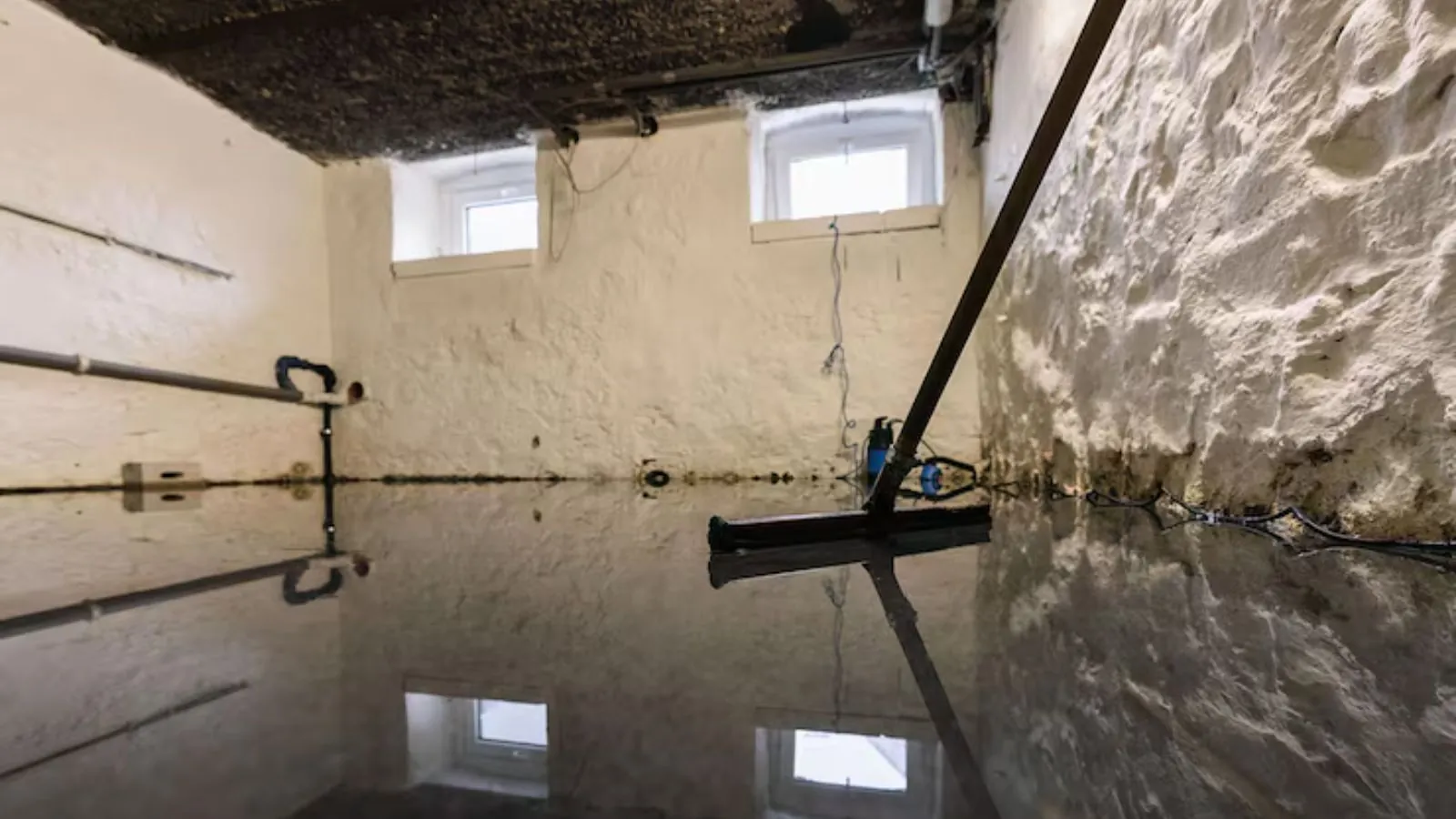
Many homeowners assume that if it is not a plumbing leak, it must be a flood. Maryland's guidance says otherwise. Water seeping through a foundation wall or floor is not a flood, so a flood policy will not pay. It is considered a maintenance issue and is generally not covered by a homeowners policy either.
This is the most common uncovered water loss in a lower level. It is also why a restoration crew asks so many questions about where the water came in.
Backup: the endorsement to check tonight
Water that comes up through a floor drain, or from a sump that fails, falls outside a standard policy. Coverage usually requires a water and sewer backup endorsement added for an extra premium.
Maryland law requires your insurer to offer that coverage. Whether you accepted it is on your declarations page. If a floor drain is the bottom-lying opening in your house, this one line of your policy deserves five minutes. The cleanup side is described on our sewage backup cleanup page.
What about rain through the roof?
Rain that enters because wind or a fallen limb damaged the roof is usually treated as part of that storm loss. Rain that enters through a roof that was simply worn out is often treated as maintenance. The distinction is the opening, not the water.
Renters and condo owners
Census estimates show 37.5 percent of Parkville households rent. A landlord's policy covers the building, not a tenant's belongings. Renters insurance covers contents and often the cost of living elsewhere.
In a condo, the association's master policy and your unit policy split the building between them. Ask the association where that line falls before you need to know.
What this means in Parkville
Parkville's housing is older than most. American Community Survey figures published by the Maryland Department of Planning show about 61 percent of homes here were built before 1960. Age alone proves nothing about a particular house, but it does make the sudden versus gradual question come up often, because long-serving plumbing can fail either way.
Attached homes add a wrinkle. Nearly 30 percent of Parkville units share a wall, as in Ridgeleigh, and water that starts next door involves two policies. In neighborhoods that straddle the city line, such as Harford Park, a drain backup is reported to a different public agency depending on which side you live.
Before you ever file
- Find your declarations page and look for a backup endorsement.
- Note your deductible, since small losses may fall under it.
- Ask whether your policy covers mold that results from a covered loss, and up to what limit.
- Photograph each room once a year so you can show its prior condition.
Questions Parkville homeowners ask
Does homeowners insurance cover a basement drain backup in Parkville?
Often only if you added a water and sewer backup endorsement. Maryland insurers are required to offer it. Report the backup to the Baltimore County Bureau of Utilities as well, since the County checks the public main.
Is water damage from rain covered?
It depends how the rain got in. Rain entering through storm damage to the building is often covered. Rising surface water is flood, and seepage through walls is generally not covered.
Will my insurer pay for drying equipment?
Mitigation costs are commonly part of a covered water claim. Whether yours are depends on the cause and your policy, so ask your insurer.
Does filing a claim raise my premium?
It can. Insurers set their own rules. Ask your agent how a claim would be treated before deciding on a small loss.