
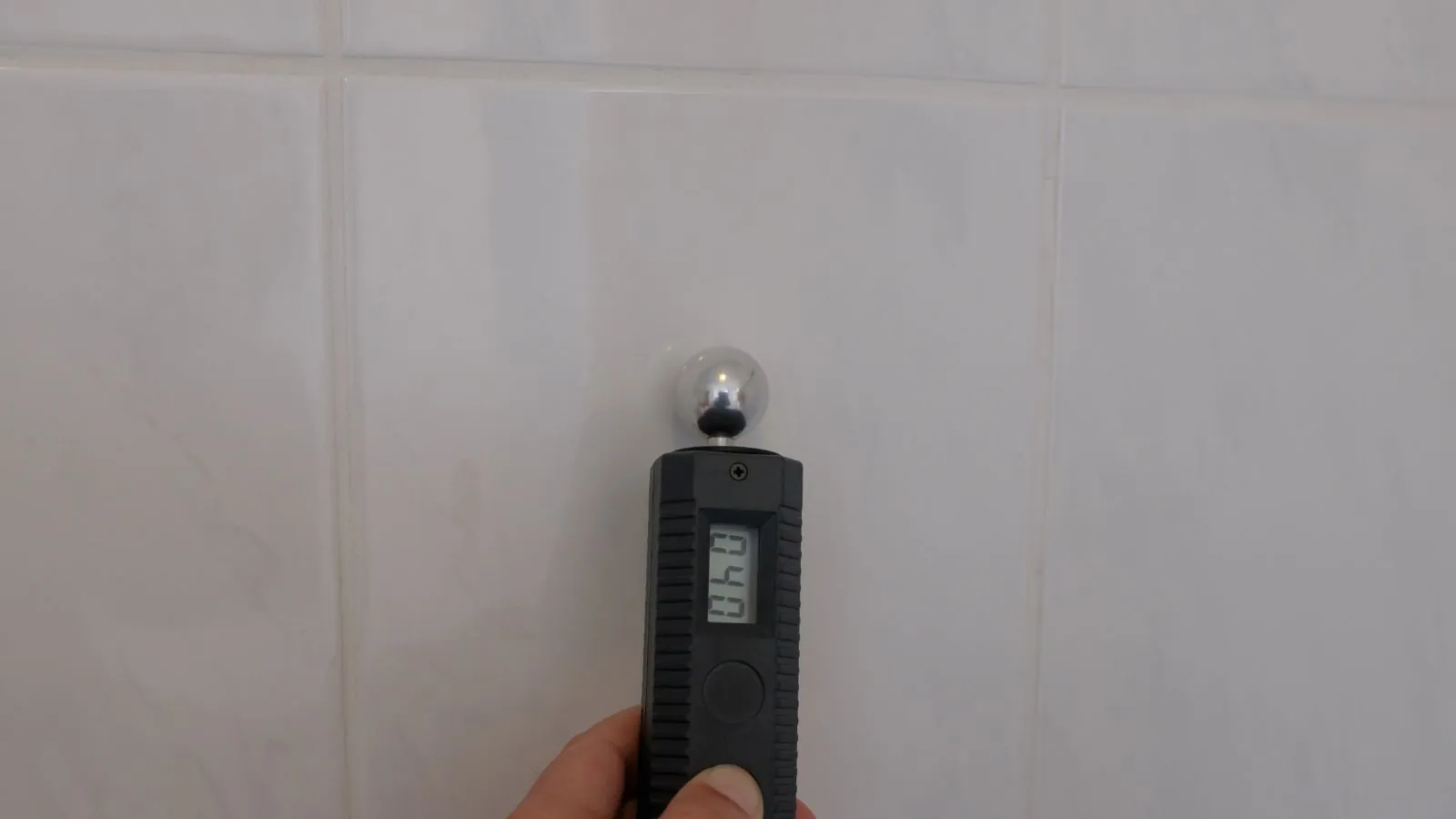
Ask a restoration technician how long drying takes and you will hear three to five days. That figure is honest for a modern room with drywall and carpet, clean water and prompt extraction. Change any one of those and the number moves.
This guide explains what the timeline depends on, material by material.
What dry actually means
Dry does not mean it feels dry. Under the ANSI/IICRC S500 standard, a material is dry when its moisture reading matches the reading for the same material in an unaffected part of the same building. That reference reading is called the dry standard.
So the goal is set by your own house. A technician reads a dry wall upstairs, then works on the wet one until the two numbers agree.
Typical drying times by material
| Material | Typical time with professional equipment | Why |
|---|---|---|
| Carpet, with pad replaced | 1 to 3 days | Thin, open fibers release water fast |
| Drywall | 3 to 5 days | Gypsum core dries steadily once air reaches both sides |
| Wood framing | 3 to 7 days | Dense, and often enclosed |
| Plaster on lath | 5 to 14 days | Thick, hard surface slows evaporation |
| Solid hardwood flooring | 7 to 14 days or more | Must dry slowly to avoid cracking |
| Concrete slab | Weeks to fully equalize | Holds water deep in its pores |
| Brick or block walls | 1 to several weeks | Stores a large amount of moisture |
These are ranges for clean-water losses with equipment running continuously. They are not promises for any particular job.
Five things that change the timeline
How much water, and for how long. A supply line that ran for ten minutes wets surfaces. One that ran all day saturates framing. Materials that were wet for several days are slower to dry and less likely to be saved.
Whether the water was extracted. Every gallon removed as liquid is a gallon that does not have to evaporate. Skipping proper water extraction can double the drying time.
Temperature and humidity. Warm, dry air pulls moisture out of materials. Cold or humid air does not. Drying in a Maryland July needs more dehumidifier capacity than drying in March.
Airflow and access. A wall dries from the side air can reach. Baseboards come off and small holes are drilled so air gets into the cavity. Cabinets, built-ins and flooring layers all block it.
Equipment that matches the job. Air movers lift moisture off surfaces and dehumidifiers remove it from the air. One without the other stalls. Our structural drying and dehumidification page explains how the two are balanced.
Want readings and a drying plan? Call the 24/7 line.
☎ Call (833) 521-1033Can it dry by itself?
A small spill on a hard floor, yes. A wet wall cavity or a soaked subfloor, not reliably. Without equipment, enclosed materials can stay damp for weeks. That is long enough for odor, staining, swelling and conditions that favor mold growth.
Opening windows helps only when the outside air is drier than the inside air. On a humid day it makes things worse.
How progress is tracked
A technician returns each day, takes readings at the same marked points and writes them in a drying log. Equipment is moved or removed as areas reach target. If a spot is not improving, something is blocking it, and the plan changes: more air, a small opening or removal of the material.
When all points match the dry standard, equipment comes out. The repair of walls and drywall and floors starts after that, not before.
Why turning machines off slows everything
Drying equipment is loud and warm, and it is tempting to switch it off overnight. Each time it stops, moisture moves back toward the surface and the room air becomes humid again. A job that would have taken four days takes six.
If noise is a real problem, tell the technician. Units can sometimes be repositioned, but they need to keep running.
What not to do while drying is under way
- Do not unplug or move the units.
- Do not open windows in the drying area on a humid day.
- Do not lay rugs or furniture back on a floor that is still being dried.
- Do not repaint or refit baseboards until the final readings are in.
Why drying often takes longer in Parkville
Housing age is the main reason. State planning data drawn from the Census Bureau puts it this way: 38.5 percent of Parkville homes were built in the 1950s and about 61 percent before 1960. Houses from those decades often have plaster walls and solid wood subfloors and floors, which sit at the slow end of the table above.
Nearly 30 percent of units here are attached homes. In communities such as Ridgeleigh, the masonry wall between houses absorbs water and gives it back slowly, so readings on that wall are usually the last to reach target. In detached areas such as Harford Park, finished lower levels over concrete add time for the same reason.
Season matters too. The National Weather Service office for Baltimore lists normal seasonal snowfall of 19.3 inches, a reminder that winter jobs need the house kept warm for equipment to work.
A realistic schedule for a typical leak
Day 1: extraction, moisture mapping, equipment set. Days 2 to 4: daily readings and adjustments. Day 4 or 5: equipment removed if targets are met. The following week: repairs begin.
Add a week or more for plaster, hardwood or masonry.
Questions Parkville homeowners ask
How long does it take to dry out a wall after a leak in Parkville?
Drywall usually takes three to five days with equipment. Plaster, which is common in Parkville's older homes, can take one to two weeks.
How do I know when it is safe to repaint or rebuild?
When moisture readings in the affected material match readings from a dry area of the same house. Ask to see the final log.
Does a dehumidifier from a hardware store do the same job?
It helps in a small room but removes far less water per day than a commercial LGR unit, and it cannot dry inside a wall without directed airflow.
Can drying be done too fast?
For hardwood and plaster, yes. Forcing them dry with high heat causes cracking. Those materials are dried slowly on purpose.