
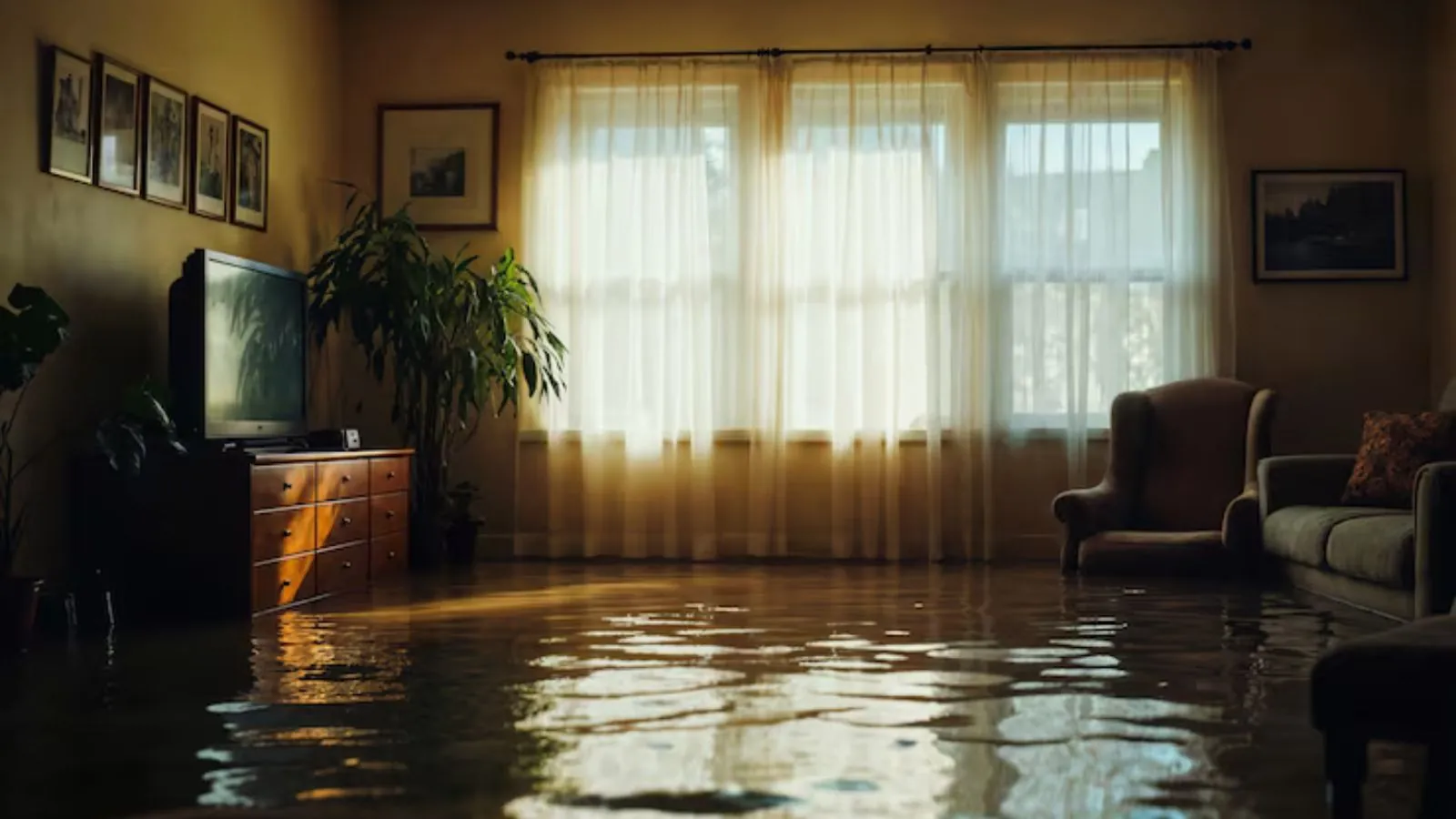
A leak in an occupied house gets noticed in minutes. The same leak in an empty house runs until someone comes home. A supply line delivering a few gallons a minute puts thousands of gallons into a building over a long weekend.
That gap is the whole reason for this checklist. None of it is expensive, and most of it takes under half an hour.
The one step that matters most
Shut off the main water valve. With the main closed, a failed hose or split pipe can release only what is already in the lines, a few gallons instead of a flood.
Find the valve today, not on the morning you leave. It is usually where the water line enters the house, on the bottom level, on the wall facing the street. Turn it fully closed, then open a tap on the top floor and one on the bottom level to release pressure. When you return, open the valve slowly and let air sputter out of the taps.
If the valve is stiff or will not close, have a plumber replace it before your trip. A valve that cannot be closed is no protection in an emergency either.
If you cannot shut the main
Some homes have a boiler, an automatic fire sprinkler system or a shared supply that makes closing the main impractical. In that case, close the individual valves instead.
| Fixture | Valve to close | Why |
|---|---|---|
| Washing machine | Both hot and cold valves behind it | Hoses are under constant pressure and fail without warning |
| Dishwasher and ice maker | Stop valve under the sink or behind the refrigerator | Small lines that leak slowly and unseen |
| Toilets | Stop valve at the wall | A stuck fill valve or cracked tank runs without stopping |
| Sinks | Stop valves in each cabinet | Braided connectors age and split |
| Outdoor spigots | Inside shutoff, if fitted | Protects the line through the wall in winter |
Water heater
With the main off, set a gas water heater to its vacation or pilot setting and an electric one to off at the breaker. A heater should not fire with no incoming supply. If you are leaving the water on, the vacation setting still saves energy and reduces stress on the tank.
Look at the base of the tank before you go. A damp ring or rust trail means it is nearing the end, and that is not something to leave unattended. Our water heater leak cleanup page describes what a failed tank does.
Came home to water? Call the 24/7 line before you unpack.
☎ Call (833) 521-1033Appliances
Do not start the dishwasher or washing machine on your way out the door. Run them earlier and confirm they finished. Empty the ice maker bin and switch the ice maker off. What happens when these fail is covered on our appliance leak water damage page.
Drains and the sump pump
Pour water into the sump pit until the float lifts and the pump runs. If it does not start, deal with it before you leave. If you have a battery backup, check its charge. Clear leaves from the outside stairwell drain if you have one.
Outside
Clean the gutters and check that downspouts send water away from the house. Disconnect garden hoses. Close windows, including those on the bottom level.
Winter trips: do not turn the heat off
Cold-weather absences need extra care, because a frozen pipe splits and then floods as it thaws.
- Set the thermostat no lower than 55 degrees Fahrenheit.
- Open cabinet doors under sinks on outside walls so warm air reaches the pipes.
- Leave interior doors open so heat circulates.
- Shut off and drain outdoor spigots.
- If you close the main, open the taps to drain the lines.
Our frozen pipe water damage page explains why these breaks are so often found late.
Ask someone to look in
No device replaces a person. Ask a neighbor or friend to walk through every couple of days, including the bottom level. Show them where the main valve is and leave a phone number. Many insurance policies have conditions about unoccupied homes, particularly in winter, so check your policy or ask your insurer how long the house can sit empty.
Leak sensors and automatic shutoffs
Battery leak sensors cost little and sound an alarm, or send a phone alert, when they get wet. Put them by the water heater, washer, dishwasher and under sinks.
An automatic shutoff valve goes a step further and closes the main when it detects unusual flow. It needs a plumber to install. Some insurers offer a premium credit for one, so it is worth asking.
Leaving a Parkville home empty
Winter here is real. The National Weather Service office for Baltimore lists normal seasonal snowfall of 19.3 inches, with January and February the snowiest months. Those are also the weeks when frozen pipe losses happen, and when a house left with the heat off is most at risk.
Heating matters for a second reason. Census estimates show about 70 percent of Parkville households heat with utility gas and about 23 percent with electricity. Either way, a power cut can stop the furnace, since gas furnaces need electricity for their blowers and controls. If a winter storm is forecast while you are away, ask your house-checker to visit afterward.
In attached homes, your precautions protect the neighbors too. In townhome communities such as Ridgeleigh, a leak in an empty house can soak the unit next door before anyone knows. In detached streets such as Hillendale Park, ask the person checking in to look at the bottom level and the ceilings under bathrooms.
Baltimore City provides water service for Baltimore County. If your main valve will not close and you need the supply stopped at the meter, that request goes to the City.
The ten-minute version
- Close the main valve and open two taps.
- Set the water heater to vacation.
- Check the sump pump.
- Set the thermostat to 55 or above in winter.
- Give a neighbor a key and your number.
Time is why all of this matters. Under ANSI/IICRC S500, the restoration standard, clean water that sits for days is treated as contaminated, and an empty house gives it those days.
If you come home to water
Do not walk into standing water if outlets or cords are in it. Close the main if it is still open and safe to reach. Take photos from the doorway. Then call for emergency water extraction.
Questions Parkville homeowners ask
Should I turn off my water when I go on vacation?
Yes, if your home has no system that needs constant supply. It is the single most effective step.
What temperature should I leave my Parkville house at in winter?
No lower than 55 degrees Fahrenheit, with sink cabinet doors open on outside walls. Do not switch the heat off.
Will insurance cover a leak that happened while I was away?
Often, if the loss was sudden. Some policies set conditions for homes left empty, such as keeping the heat on or shutting off water. Ask your insurer.
Is it safe to turn off the water heater?
Yes. Use the vacation or pilot setting on a gas unit, or switch off the breaker on an electric one, especially when the main is closed.