
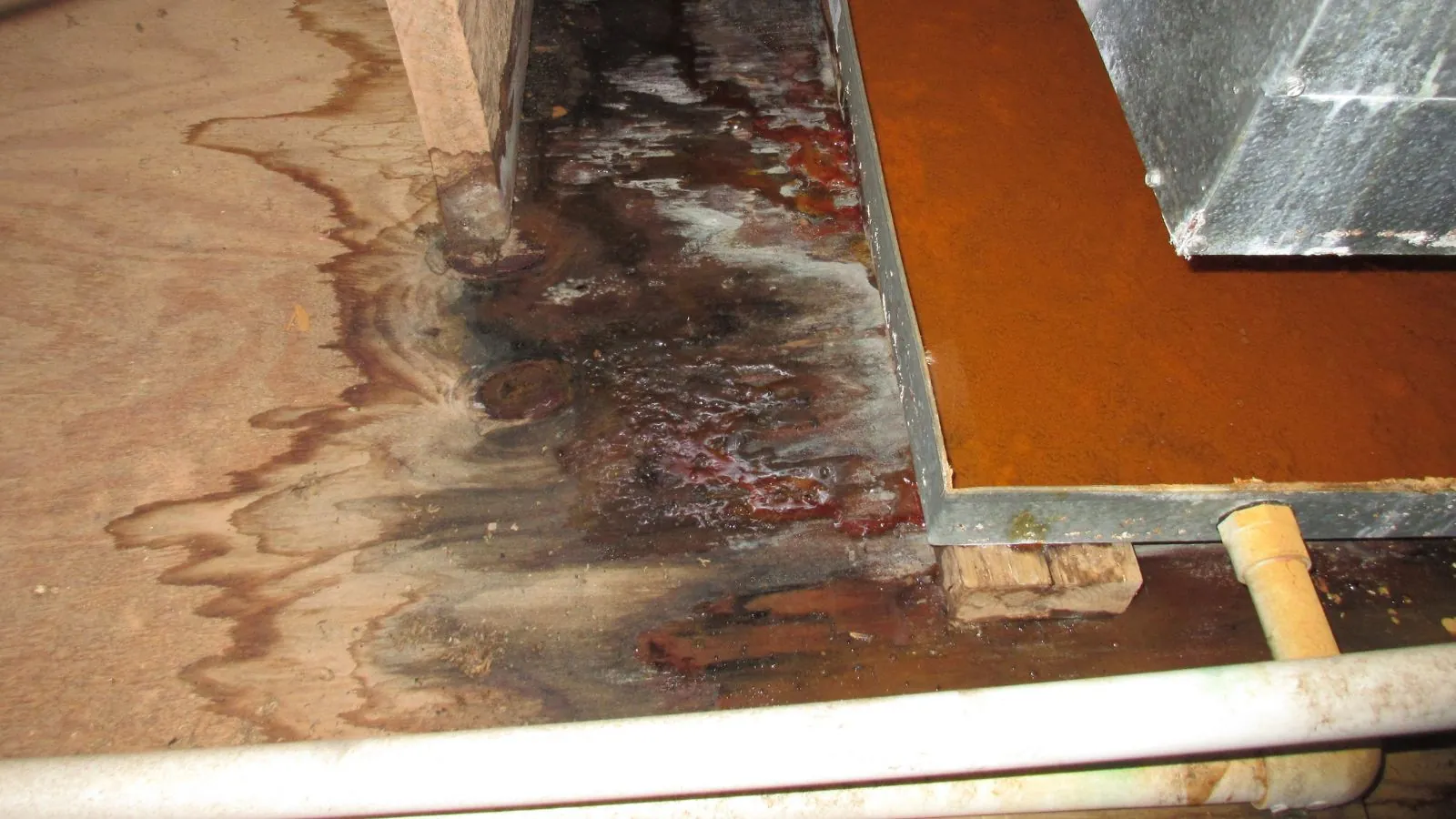
When a restoration technician walks in, one of the first things they decide is the category of the water. It sounds like jargon. In practice it decides what gets dried, what gets thrown away and how careful everyone has to be.
The categories come from ANSI/IICRC S500, the published industry standard for water damage restoration. Here is what they mean without the technical language.
The three categories at a glance
| Category | Common name | Where it comes from | What it means for your home |
|---|---|---|---|
| 1 | Clean water | Supply lines, faucets, water heaters, rain through a new opening | Most materials can be dried and kept if work starts quickly |
| 2 | Gray water | Washer and dishwasher drains, tub and sink overflows, aquariums, toilet overflow with urine only | Carpet pad replaced, surfaces cleaned, many materials still saved |
| 3 | Black water | Sewage, drain backups, floodwater from outside, toilet backflow from beyond the trap | Porous materials removed, everything else cleaned and disinfected |
Category 1: clean water
This is water that started out fit to drink. A burst supply pipe, a failed ice maker line, an overflowing sink with the tap running.
Clean water is the forgiving kind. Drywall, carpet, wood and even insulation can often be dried in place when the leak is caught early. The work is mostly extraction and controlled drying, as described on our burst pipe water damage page.
Category 2: gray water
Gray water carries enough contamination to cause discomfort or illness if swallowed. It has been used: for washing clothes, dishes or people.
The usual sources are appliance drains and overflows. Our appliance leak water damage page explains why it matters which side of a washer leaked. A supply hose is Category 1. The drain hose is Category 2.
With gray water, carpet pad is discarded, carpet is cleaned and sometimes kept, and hard surfaces are cleaned before drying.
Not sure what kind of water you have? Call and describe where it came from.
☎ Call (833) 521-1033Category 3: black water
This is grossly contaminated water. Sewage is the obvious case. Less obvious, and just as important, is floodwater. Any water that has run across the ground or risen from outside is Category 3 no matter how clear it looks, because of what it picked up on the way.
Rules for Category 3 are strict. Carpet, pad, drywall, insulation and upholstered items that absorbed it are removed. Structural wood and concrete are cleaned, disinfected and then dried. Our sewage backup cleanup and flood damage cleanup pages cover the process.
Categories get worse with time
This is the part most people have not heard. A category is not fixed at the moment of the leak. Clean water that sits picks up whatever it touches, including soil in carpet, dust in wall cavities and residues on floors. Add warmth and a few days, and bacteria multiply.
The standard recognizes this. Category 1 water left standing can be reclassified as Category 2, and Category 2 as Category 3. As a working rule, technicians treat clean water that has sat for more than two to three days with much more caution.
That is the real argument for acting quickly. Speed does not just limit the wet area. It keeps the water in the category where your belongings can be saved.
Category is not the same as class
You may also hear a class number. Category describes how dirty the water is. Class describes how much water there is and how hard it will be to dry, from Class 1, a small area with little absorption, up to Class 4, deeply soaked dense materials such as hardwood, plaster and concrete.
A job has both: for example, Category 1, Class 3 is clean water that soaked a whole room including the walls.
What you can do safely in each case
Category 1: stop the source, mop and blot, move belongings, start airflow. Reasonable for a homeowner if the area is small.
Category 2: wear gloves, keep children and pets away, do not use a household carpet cleaner on it, and wash hands after contact. Small areas on hard floors can be cleaned with detergent and disinfectant.
Category 3: stay out. Do not run fans, which spread contamination. Do not use a shop vacuum. Close the door and call for professional cleanup.
Why Category 3 questions come up in Parkville
Sewer responsibility in Baltimore County is split, and that affects who you call. The County states that it cleans from the first accessible cleanout within 50 feet of the property line out to the main, and that anything inside the property boundary is the owner's responsibility. Sewer backups are reported to the County's Bureau of Utilities.
The County also notes that an outside cleanout was not required by building code until the mid-1970s. About 90 percent of Parkville housing predates 1980, by Census estimates, so many homes here have no outside cleanout. That can slow the clearing of a blockage and lengthen the time sewage stands indoors.
Stormwater is the other source. Baltimore County began a Parkville drainage study in 2025 to collect reports of local drainage and flooding. If water entered from the street, in Harford Park, Hillendale Park or anywhere else, it is Category 3 and should also be reported to the County through 311.
Why technicians ask so many questions
Where did it start? What does that pipe carry? How long ago? Did it pass through a ceiling or across a floor first? Each answer narrows the category. If the truth is that nobody knows how long it has been wet, say that. It changes the plan, and it should.
Questions Parkville homeowners ask
Is rainwater Category 1?
Rain falling straight through a fresh roof opening is treated as clean. Rain that ran across the ground, through soil or over a dirty surface before entering is not.
Is toilet overflow always Category 3?
No. A clean bowl overflowing from the supply side is Category 1 or 2. Water that comes back up from the drain line beyond the trap, or contains feces, is Category 3.
My Parkville floor drain backed up with clear water. Is that still contaminated?
Yes. Anything that comes up from a drain is treated as Category 3, however clear it appears. Report it to the Baltimore County Bureau of Utilities too.
Who decides the category?
The restoration technician, based on the source, the time elapsed and what the water contacted. It is recorded in the job file.