
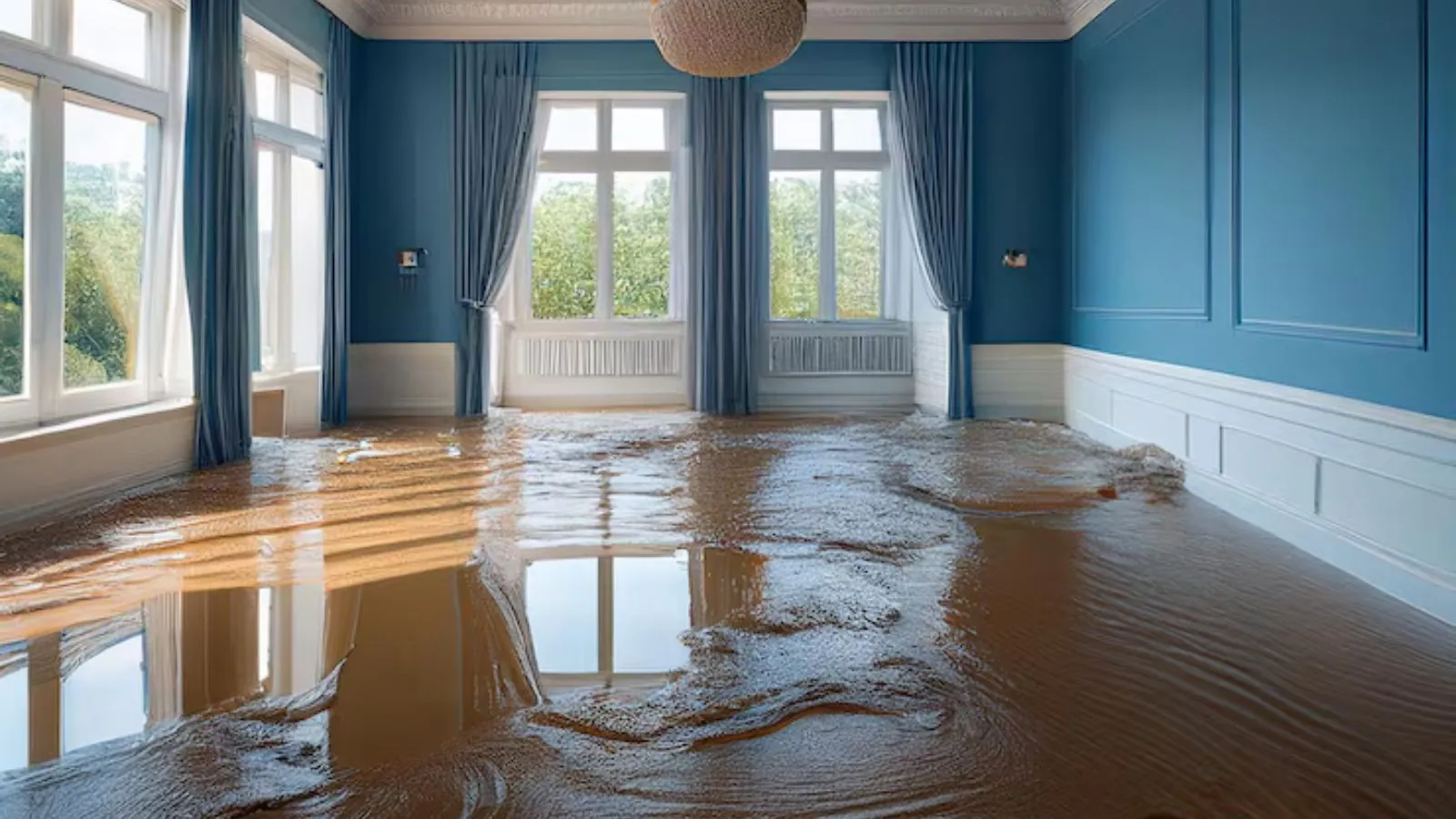
An adjuster was not in your house when the pipe let go. Everything they decide rests on what you and your contractors can show them afterward. This guide covers the order of steps and the documents that describe a water loss well.
It is general information. Your policy sets your actual duties, and your insurer or agent can explain them.
Step 1: Stop the water and make it safe
Close the valve. Keep people away from wet outlets and sagging ceilings. For gas, sparking or structural danger, call 911 or the utility. No document is worth an injury.
Policies generally expect you to take reasonable steps to prevent further damage. Shutting off water and starting to dry are part of that.
Step 2: Photograph before you move anything
Take wide shots of each room, then close shots of the damage. Capture the water line on walls, the failed part in place and any belongings that got wet. Short videos work well for showing where water is still running.
Photograph the source itself. A split hose, a corroded fitting or a hole in the roof is the single most useful image in the file, because it shows the cause.
Step 3: Notify your insurer promptly
Call the claims number on your policy or use the insurer's app. Give the date and time you found the loss, what happened and what you have done so far. Write down the claim number and the name of everyone you speak to.
Ask two questions on that first call: may emergency drying begin now, and does the insurer want to see damaged items before they are thrown away?
Need the loss documented and dried? Call the 24/7 line.
☎ Call (833) 521-1033Step 4: Start mitigation and keep the records
Extraction and drying should not wait for the adjuster's visit. What matters is that the work is documented. A proper file includes the items below.
| Record | Who produces it | What it shows |
|---|---|---|
| Initial moisture map | Restoration crew | How far the water spread on day one |
| Photos before, during and after | You and the crew | Condition at each stage |
| Daily drying log | Restoration crew | Readings falling toward the target |
| Equipment list | Restoration crew | What ran and for how many days |
| Itemized scope | Restoration crew | Each task and material, line by line |
| Plumber's or roofer's invoice | That trade | The cause and when it was repaired |
Our structural drying page explains how those readings are taken. If standing water has to come out first, see water extraction.
Ask whether the crew works to ANSI/IICRC S500. Records kept to that standard include the water category and the dry reference readings an adjuster looks for.
Step 5: Keep the failed part and the damaged items
Ask the plumber to leave the broken section of pipe or hose. Keep it in a bag with the date. Do not throw away damaged belongings until the adjuster has seen them or told you photographs are enough.
For items that must go at once, such as sewage-soaked carpet, photograph them in place and again at the curb, and list them.
Step 6: Make an inventory
List damaged contents room by room: what it is, roughly when you bought it and what it cost. Receipts, card statements and old photos all help. A phone video walking through closets and shelves before anything is moved is a quick way to capture it.
Step 7: Meet the adjuster
Walk them through the timeline. Hand over copies, not originals. Ask what is included in their estimate, what is not and why. If the rebuild estimate differs from your contractor's scope, the two can usually be compared line by line.
Step 8: Track living costs
If the home cannot be lived in, keep every receipt for lodging, meals and laundry. Many policies include additional living expense coverage, with limits. Ask your insurer what applies.
Mistakes that weaken a claim
- Waiting days to report it.
- Throwing out the failed part.
- Starting permanent repairs before the adjuster has seen the damage or agreed the scope.
- Having no photos from before cleanup.
- Guessing at dates. If you are unsure when a leak began, say so.
Parkville specifics worth knowing
Baltimore City is responsible for water service in Baltimore County. If the loss involved a water main or a meter, report it to the City and note the report number in your file. Sewer backups are reported to the Baltimore County Bureau of Utilities, and street flooding goes to the County through 311 or the BaltCoGo app. Those public reports help show the cause.
Rebuild work that includes structural changes, or any electrical or plumbing work, needs a permit from the Baltimore County Department of Permits, Approvals and Inspections. Keep permit paperwork with the claim. In attached-home communities such as Ridgeleigh and in older streets around Hillendale Park, tell your neighbor early if a shared wall is involved, since their insurer may need the same records.
If you disagree with the outcome
Ask the insurer for the decision in writing and the policy language it relies on. The Maryland Insurance Administration accepts consumer complaints and explains the process on its website. We do not negotiate claims or interpret policies. Our role is to supply accurate records of the damage and the work.
Questions Parkville homeowners ask
Should I wait for the adjuster before drying my Parkville home?
No. Document the damage with photos, tell your insurer you are starting emergency drying, and begin. Waiting lets the damage grow.
How long do I have to report a water damage claim?
Policies say promptly or as soon as practical, and some set specific time limits. Read your policy and report right away.
Do I need more than one estimate?
Insurers differ. Ask yours. What helps most is an itemized scope with measurements and not a single lump sum.
Can a restoration company deal with my insurer for me?
A restoration company can provide its records and answer the adjuster's questions about the work. The claim itself, and any decision about it, stays between you and your insurer.